Serve And Volley › Serve-and-Volley — Is It Worth It?
Serve-and-Volley — Is It Worth It?
← Back to all chapters in Serve And Volley
Serve-and-Volley… Is it worth it?
As we discussed in class, tennis is one apt example where we can observe game theory. Even though one person technically makes a move, or hits the ball first, it’s a matter of seconds so the returner already has to start to anticipate where the ball will go. It’s hard for viewers unfamiliar with the game to notice this on baseline rallies, where both players are hitting the ball from the back of the court.
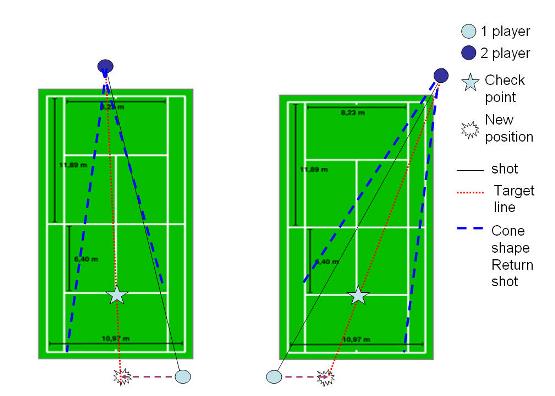
From any angle on the court, there are certain high percentage shots that a player can hit and is most likely to make. Thus, the returner can position him or herself in a strategic position as to maximize their chance of hitting the ball back. For example, in the picture below, the dotted lines depict the range of court in which player 2 can return the ball made.
Thus, after player 1 hits the ball, he or she are recovering to get back into position, so as to maximize their payoff and ability to stay in the point. Generally, if one were to make two categories (one for hitting inside the blue lines and one for hitting outside the blue lines), one would find that this is the dominant strategy, as the chances of hitting a shot and winning the point by hitting outside the blue dotted lines are very low. Thus over the course of a match, the payoff will be less.
However, an easier way to understand the application of game theory would be through serve-and-volleying. A once widely used strategy, serve-and-volleying refers to when a server serves the ball, normally fast or at a hard angle, and comes to the net to volley, or return the ball without it bouncing. The advantage of this strategy is that it catches your opponent off guard and shortens the time between the returner’s first shot and second shot they have to hit.
At the same time, the tactic relies on catching your opponent off guard. Unless the serve is hit really well*, the returner has a wide angle to work with because all he or she has to do is hit it out of the reach of the server or lob the ball so the server can’t get to it. This form of play was popular in the olden days, in the time of John McEnroe, Pete Sampras, Andre Agassi, Martina Navratilova, etc. because of the wooden rackets and playing style at the time.
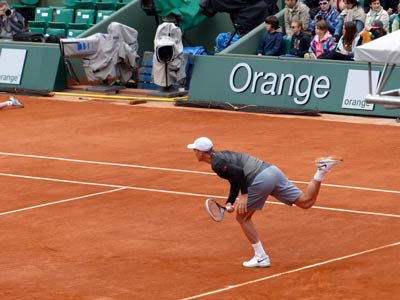
However, as tennis ushered into the new era, players began to develop a better baseline game and switched to heavier steel and aluminum rackets, which increased the ability of a player to hit a groundstroke or return better. However, some players still prefer this tactic. Normally, large players who don’t have the stamina or the baseline game to go toe-to-toe with their opponents employ this tactic. Still, research shows it’s becoming more of a hit or miss game.
One player, Mischa Zverev of Germany, described it as “flipping a coin 200 times a day and then [hoping] you win the majority of those coin tosses” (Reuters). He’s absolutely right, as at the end of the day, this is nothing but game theory. There is no dominant strategy or Nash equilibrium. If Zverev were to serve and volley, a few points in the opponent would just start to anticipate the approach and counter it with either an angle shot or a lob.
Over time, the likelihood of Zverev winning a point with this strategy would be slim to none. Thus, he not only has to decide whether to come in or not but where to serve as well. Thus, the possibilities are endless, making it a mixed strategy game, where the server has switch his strategy up on any given point.
To hear more from Mischa Zverev about serve-and-volleying, click this https://www.youtube.com/watch?v=NrUy_1SshO4 *Note: For the sake of argument, this analysis assumes that the serve hit is viable enough to employ this approach. In a real tennis match, there are numerous other factors that limit or enhance this strategy such as the player’s service strength, the court surface, weather conditions, the opponent’s court positioning, etc.
How To Serve and Volley Like The Pros
Serve and Volley Tips
How would you like to serve and volley effortlessly like the pros? Are you making any of my top four most common serve and volley mistakes? In this tennis blog, I will share with you tennis movement and split step tips to improve your serve and volley game. Moreover, I will give you a drill you can do by yourself to correct them.
Common Serve and Volley Mistakes
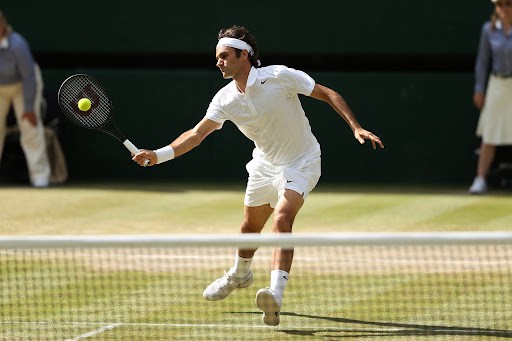
Before I discuss how to practice your serve and volley, I want to go over what not to practice. There are four primary mistakes I see people make while serving and volleying. The first two focus on the server’s approach to the net. First mistake, approach the net with short strides. Instead of taking several small steps, take one to three big strides. You will see more success with bigger strides. Second mistake, stand up tall after the serve.
If you stay low after serving, you can take fewer, but larger steps to achieve a better approach. The third mistake is splitting at the service line. There is a common misconception that when you serve and volley, the split step must be at the service line. In reality, it is okay for your split step to be in no man’s land, as long as you move forward to hit your volley in front of the service line. The fourth mistake is splitting and ceasing all forward momentum.
Try not to stop all of your forward movement with your split step. Think of your split step as a “split and move” instead of split and stop. You want your approach to be a continuous flow.
How To Split Step and Move
When it comes to serving and volleying, split step footwork is a hot topic. Think about your own split step. Is your split step narrow or wide? Do your feet touch the ground at the same time or are they staggered? A wide split step provides a good base and balance for your volley. Touching both feet to the ground evenly at the same time during your split step stops your forward momentum completely.
In order to move forward after a volley, you have to restart that forward momentum, and that takes more time. Instead of a split step, think split and move. Both feet should not hit the ground at the same time to keep the movement continuous. If I had to choose between a player that splits and stops and one that does not split, I will take the person that moves. The reason being, the moving player has momentum going towards the ball.
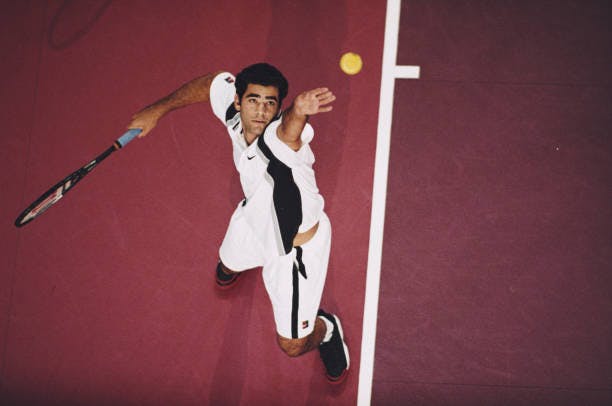
Sure, that creates a reaction problem, but I would take my chances with the player moving continuously. The player that splits and stops will have to completely start their forward momentum again.
Serve and Volley Tennis Movement
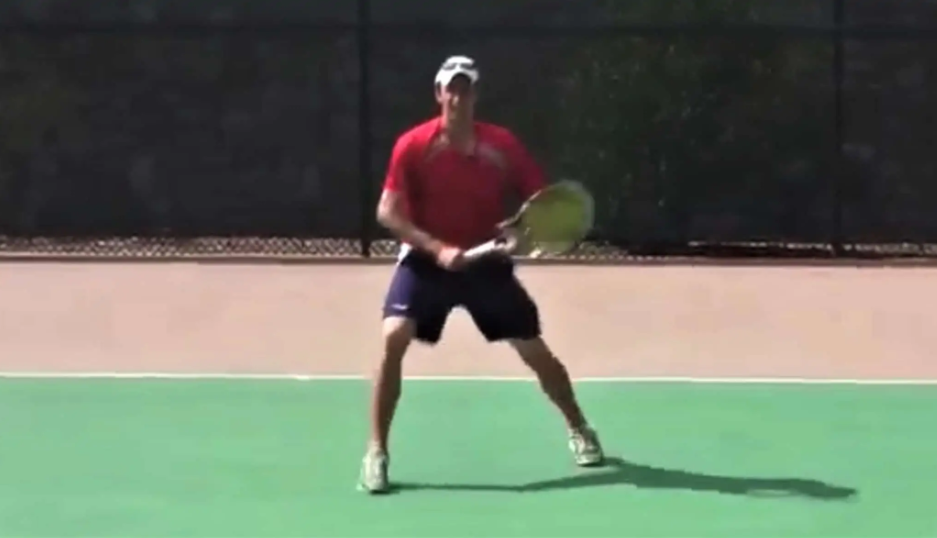
During a serve and volley tennis movement, there are three primary times to focus on a continuous motion. The split step, volley follow through, and volley recovery should all focus on continuous motion. Let’s break down each of these motions during a serve and volley. First, as we discussed before, try not to completely stop during your split step. Stagger your feet, so they do not touch the ground at the same time. Continually flow through the split step motion.
Second, when you follow through after contact for a volley, hold the finishing position. Do not immediately reset the racquet, but hold the finish position as you move to your recovery position. Last, make sure you recover after you hit your volley. Try not to stop your feet immediately after hitting a volley because you will not be in a good position to play the next ball. Recover slightly down the line from where you hit your volley.
The Problem with Serve and Volley Practice
The challenge with practicing the serve and volley is, there is really only one way to practice: play matches. If you are a competitor like me, it is difficult to practice serving and volleying in a match if it is not a skill that you are comfortable with. The only way to practice at home is to have a partner willing to feed you balls. It is much harder for those of you that do not have someone to feed you balls. It is also difficult to practice when you compete because of little repetition.
Repetition can also be particularly difficult if the return does not come back. Over the course of a set, you may only hit five volleys when you serve and volley. This simply is not enough repetition to make true improvements.
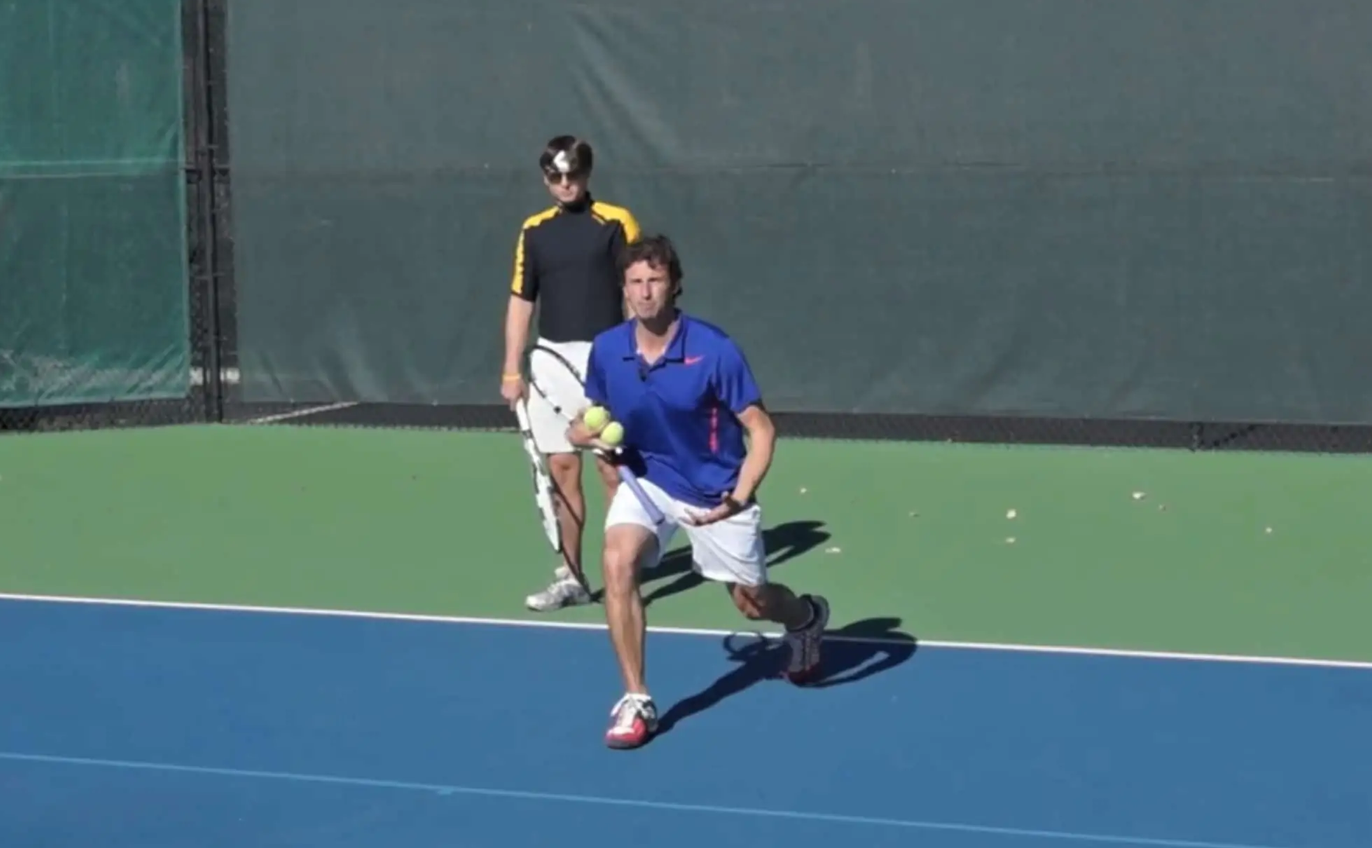
The Solution: How to Practice Serve and Volley
You may be thinking, with no good way to practice a serve and volley, how am I supposed to improve? I recommend using the shadow stroke method to improve your tennis movement. Learn the tennis movements and concepts first. Most tennis players are not going to spend time on their tennis movement. If you are committed to learning to serve and volley, this is a great place to start. Here are three steps to practice your serve and volley tennis movement. No partner or ball needed!
First, perform a shadow serve stroke; mimic a service motion without hitting a ball. Second, recover forward and split and move. Stay low, take one to three steps forward, and stagger your feet to split and move. Third, move forward to hit a shadow volley, step forward toward the invisible ball, and mimic hitting a volley. Fourth, recover after the shadow volley. Hold your volley finish position while continuously moving your feet to a proper volley recovery position.
Conclusion
In conclusion, know that a good serve and volley is all about developing rhythm, timing, and flow. Get a good rhythm down and move the right way. Avoid the little choppy steps, do not stop on your split step, and keep moving through it. Hit a volley, and keep moving after the volley to your recovery spot. Shadow stroking the serve and volley can help you understand the rhythm of moving forward on a serve and volley. Practice it on your own time without a ball.
This is not easy if you have not practiced tennis movement skills before, but these tips can get you to the next level for your serve and volley game. By Jeff Salzenstein, Founder Tennis Evolution Jeff is a former top 100 ATP player and USTA high performance coach committed to helping players and coaches all over the world improve. serveandvolleytennis.com