Serve And Volley › Serve and Volley — The Classic Net-Rushing Style
Serve and Volley — The Classic Net-Rushing Style
← Back to all chapters in Serve And Volley
Serve and Volley: The Classic Net-Rushing Style
Roger Federer strikes a volley at the Wimbledon Championships. Photo courtesy of Scott Heavey/AELTC. Tennis has come a long way over the years. In 1980, a long point with sharply angled shots and players racing around practically the entire court would seem impossible, yet today points like this are played in every match. Since court surfaces changed, racket technology evolved, and nutrition and fitness improved, tennis modernized.
Today’s players are fitter, stronger and faster than their 20th century counterparts. A tactic that many players practically left for dead is serving and volleying. This maneuver consists of racing up to the net after hitting a serve to strike the next shot before it bounces (hitting a ball out of the air is called a volley). From close to the net, a few angles open up that are not conceivable from the baseline (where a player serves from to start a point), some 39 feet back from the net.
The problem is that successfully serving and volleying is somewhat contingent on the return being weak — a bullet near either sideline or low enough to force an awkward volley can rarely be poked away easily to end a point. With today’s rackets, it is far easier to hit returns with sharp angles or extreme pace than it was 30 or 40 years ago, making serving and volleying a risky proposition.
Not only that, in the late 1900s grass courts were notoriously uneven, resulting in many bad bounces that serve-and-volley became a viable strategy almost out of necessity: let the ball bounce at your own peril. Serve-and-volley is used sporadically in today’s game. A good enough serve can often lead to success, as can an unexpected charge to the net.
But if a returner sees a server race up to the net, they are often able to pick a target and rip a return loaded with topspin that is nearly impossible to control with a volley. There are many tennis traditionalists out there who believe serve-and-volley is still a viable tactic, beyond just coming to the net off good serves or at unexpected times. A recent example supported their theory.
On Sunday, world number one Novak Djokovic served and volleyed 22 times in the final of the Rolex Paris Masters tournament, winning 19 points for his endeavors: a phenomenal success rate of 86%. Djokovic would win the match 4–6, 6–3, 6–3, with his serve-and-volleying a big reason for his victory.
Craig O’Shannessy, a prominent strategy coach who writes analytical pieces for the ATP Tour website among other well-known publications, wrote an article after the final that argued that “the death of serve and volley in our sport is pure misconception” and referred to serve-and-volley’s decreased use as a “delusional fallacy.” O’Shannessy knows tennis, and there is no denying that Djokovic’s use of net play in the Paris final was a pivotal tactic.
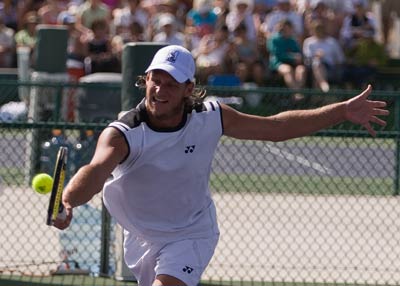
But to draw the conclusion that serving and volleying is still a consistently viable strategy in today’s game is a stretch. It is important to note that the Paris final was a very particular matchup: Djokovic played Daniil Medvedev, who likes to play points from the back of the court and returns his opponents’ aggressive shots without fail, resulting in them eventually making a frustrated error.
Many of Medvedev’s returns go down the middle of the court though, so opportune net play can result in some easy volleys that do not have to be hit on the stretch. “Opportune net play” probably sums up Djokovic’s tactics best: Djokovic has built a career playing similarly to the way Medvedev plays now, but at 34 years of age, endlessly sprinting and sliding from the baseline to keep points alive does not always work. So Djokovic learned to sneak into the net when necessary to cut a point short.
Djokovic’s net skills are far from revolutionary. Though a solid volleyer, Djokovic does not make eye-popping volleys like Roger Federer once did. But through coming to the net off good serves or approach shots, Djokovic can put himself in position to hit easy volleys. Serve-and-volley still is not a sustainable, winning strategy; it’s more of a supplemental tool that can be instrumental in getting out of jams.
Few players return serves from as far behind the baseline as Medvedev, making it easier to get angles on returns that can defeat a net rush. The tactic will probably work at times, but drawing a sweeping conclusion that serve-and-volley is not, and has never been, overshadowed by more modern winning techniques is probably buoyed by the temptation of nostalgia.
Despite O’Shannessy’s correct observation that serve-and-volley was pivotal in the recent Paris final, Djokovic’s execution of the strategy was risky and may not work as well in the future. Serve-and-volley may be a relic that can still occasionally be very useful, but it is a relic nonetheless.
How to Beat a Serve-and-Volley Player
By Krsto Arsenijevic Pete Sampras dominated the entire world of tennis through a dominant use of the serve-and-volley strategy. He consistently forced his opponents to make unforced errors through his excellence in this type of play. However, just as in other sports, tennis has gone through a change of play. No longer is the serve-and-volley approach recommended by tennis experts. This doesn’t mean it’s completely extinct though. Here, I’ll show you how to beat it when you see it!
Basic Meaning of Serve-and-Volley
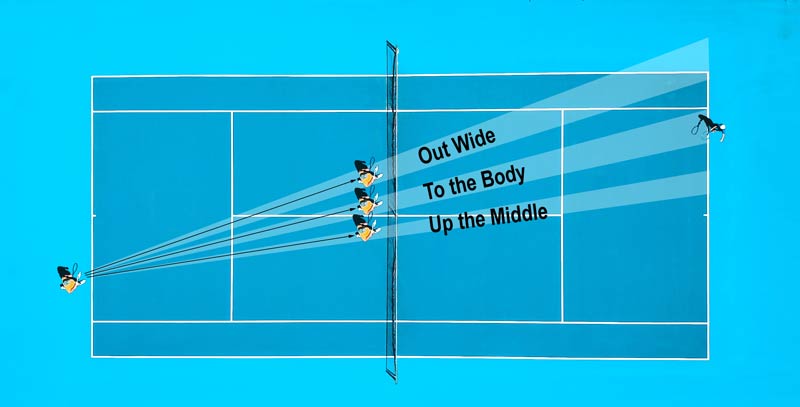
The goal of a serve-and-volley player isn’t complex. Simply put, they’re looking to get in a strong first serve that doesn’t allow a strong groundstroke in the return. Then, immediately after serving, they’ll rush the net and look to volley the ball back before it hits the ground. The two primary qualities needed are a big serve and quickness off the line. As for the returner, it puts them in immediate pressure.
Even though it’s tough to get a strong return on a big serve, you can’t hit a light shot that allows the server plenty of time to set up a winner.
The Fastest Miles Ever Run
Typically, serve-and-volley players are going to experience more success on hardcourt and grass court surfaces. It can be a daunting task for the opponent, but there are still plenty of ways to get by these serve-and-volley players with a victory.
Look for Your Chances
Cautious or Reckless?
There are two ways you can attack a serve-and-volley player: cautiously or recklessly. The cautious approach will lead to you just returning the first serve and not attempting any type of passing shots. Essentially, you’re not going to let your own shots lose the point, but rather make the opponent win the point. Conversely, a reckless strategy will attempt a high-degree of passing shots. This player will try to hit a big shot with every swing and go for a winner often.
There are glaring negatives with each approach. A cautious approach can result in an experienced player making quick work of you. Meanwhile, a reckless approach will lead to a high number of unforced errors.
A Little of Both
My best solution is to play a mixture of cautious and reckless. With a serve-and-volley player, you’re not going to have a chance for a point on every shot. This requires patience. If they make a strong serve, just get a return in and wait for the opportunity to hit a winner. Sometimes, you’ll even luck out and they’ll miss on an open shot. The key is to wait for your chances. Don’t give your opponent free points, make them earn it!
Play to Their Weaknesses
Unless you’re playing someone like Roger Federer or Novak Djokovic, chances are your opponent will have some holes in their game. As a player, it is your job to find these weaknesses and take advantage of them. Even if this requires you to alter your approach slightly, it is still likely going to be worth it. If you don’t have the opportunity to watch them in a previous match, check out how they play warming up and in the early stages of your match.
Do they struggle running back if a lob was hit over their head? Is their backhand or forehand stronger? Finding answers to these questions will help greatly as the match carries on.
Get the First Return In
As I mentioned earlier, a big serve is a critical part of the serve-and-volley approach. If they can’t force you to stay back behind the baseline, then the serve-and-volley strategy won’t be effective. Assuming they do have a strong serve, the only way to stay in the point is to get the first return over the net. While it would be ideal to get a decent return in, I recommend making sure you get the first return in for the early stages of the match.
This will not only make the games closer, but it will increase your own confidence. If they’re serving up aces on multiple serves each game, then chances are your confidence would start to drop and your own game would suffer. However, getting the returns early in the match will make you believe that you can start trying different and stronger returns as the game progresses.
Try to Keep Them Back
At the core of serve-and-volley player’s games is the idea that they want to get to the net. They want to put pressure on you. On the opposite end, you will want to keep them back closer to the baseline. Once they get to the net, it will be tougher to win the point. There are two methods for this. First, you can work on blocking the initial serve back so it goes deeper on your opponent’s court. This shot takes a lot of work due to the speed this serve may be coming in at.
However, it will keep them closer to the baseline. The second approach is for when the server is able to get to the net. In these situations, you can hit a lob. A lob goes over their head and forces them retreat on their court. If you’re able to successfully hit a few good lobs, it could also force them to hang back longer on some points due to tentativeness.
Hold Serve
Serve-and-volley players are going to be tough to break on most occasions. In these matches, you may only have a few break opportunities. With this being the case, it is vital to hold your own service games. By doing so, it will not only put you in a better position to win, but also apply more pressure to them on their service games. While learning how to effectively serve is a long concept in its own, the best advice I can give here is to be aware of them coming to the net when you’re serving.
After one or two shots, they’ll look to charge the net and put pressure on you. They will want to prevent any long rallies, so don’t be worried when they do come in.
Control Momentum
In nearly every sport, the word ‘momentum’ gets tossed around frequently. A team can be rolling along and then one play can change the entire outlook of the game. The same idea is present in tennis. Your opponent can be controlling the match, but one break could certainly change the tides. Be aware of this and try to grab the momentum early in the match. Players aren’t always completely ready when the game starts, so take advantage of this and come out ready to play.
This will not only ensure momentum is on your side, but can also set a tone for the rest of the match.
Practice!
Since serve-and-volley is a rarity in today’s game, it is tougher to be prepared for it when a player pulls it out. As a result, practice the concepts utilized by it during practice. For example, have a teammate serve and then rush the net against you even if they’re not a serve-and-volley player. They don’t have to possess a huge serve. Just practicing against the basic concepts will put you in a better mental mindset for moments when you’re faced with it in an actual match.
The Right Amount of Serve-and-Volley
In modern tennis, players approach the net at their own peril, especially behind their serve. Technological advances in both strings and rackets have made passing shots faster and more accurate, giving an added edge to the returner. It’s hard to imagine the game changing so that serve-and-volleying would once again become a dominant tactic. Yet pundits and commentators often suggest that players should approach the net more often, sometimes advocating for more frequent serve-and-volleying.
In a recent article at FiveThirtyEight, Amy Lundy brought some numbers to the discussion, pointing out that at the US Open this year, women have won 76% of their serve-and-volley points and men have won 66%. She also provides year-by-year numbers from the women’s Wimbledon draw showing that for more than a decade, the serve-and-volley success rate has hovered around the mid-sixties. Sounds good, right? Well… not so fast.
Through the quarter-finals in New York, men had won roughly 72% of their first-serve points. Most serve-and-volley attempts come on first serves, so a 66% success rate when charging the net doesn’t make for much of a recommendation. The women’s number of 76% is more encouraging, as the overall first-serve win rate in the women’s draw is about 64%. But as we’ll see, WTA players are usually much less successful.
Net game theory
When evaluating a tactic, we have to start by recognizing that players and coaches generally know what they’re doing. Sure, they make mistakes, and they can fall into suboptimal patterns. But it would be a big surprise to find that they’ve left hundreds of points on the table by ignoring a well-known option. If more frequent serve-and-volleying was such a slam dunk, wouldn’t players be doing so?
I dug into Match Charting Project data to get a better idea of how often players are using the serve-and-volley, how successful it has been. and, just as important, how successful they’ve been when they aren’t using it. The results are considerably more mixed than the serve-and-volley cheerleaders would have it. Let’s start with the women. In close to 2,000 charted matches from 2010 to the present, I found 429 player-matches with at least one serve-and-volley attempt.
After excluding aces, regardless of whether the server was intending to approach, those 429 players combined for 1,191 serve-and-volley attempts–95% of them on first serves–of which they won 747. Had those players not serve-and-volleyed on those 1,191 points and won at the same rate as their first- and second-serve baseline points in the same matches, they would have won 725 points. In other words, serve-and-volleying resulted in a winning percentage of 62.7%, and staying back was good for 60.9%.
Just to be clear, this is a direct comparison of success rates for the same players against the same opponents, controlling for the differences between first and second serves. A difference of nearly two percentage points is nothing to sneeze at, but it’s a far cry from the more than ten percent gap we’ve seen on the women’s side at the US Open this year. And it might not be enough of a benefit for many players to overcome their own discomfort or lack of familiarity with the tactic.
When we apply the same analysis to the men, the results are downright baffling. We have more data to work with here: In nearly 1,500 charted matches from 2010 to the present, more than half of the possible player-matches (1,631) tried at least one serve-and-volley. About four in five–once again excluding aces–were first serves. The tour-wide success rate was similar to what we’ve seen at the Open this year, at 66.8%.
Controlling for first and second serves, the same servers, at the same tournaments, facing the same opponents, won points at a 72.2% rate when they weren’t serve-and-volleying. That’s a five percentage point gap* that says men, on average, and serve-and-volleying too much. * Technical note: These overall rates simply tally all the serve-and-volley attempts and successes for all players. Thus, they may give too much weight to frequent netrushers.
I ran the same calculation in two other ways: giving equal weight to each player-match, and weighting each player-match by ln(a+1), where a is the number of serve-and-volley attempts. In both cases the gap shrunk a bit, to four percentage points, which doesn’t change the conclusion. I was shocked to see this result, and I’m not sure what to make of it.
It’s roughly the same for men who serve-and-volley frequently as for those who don’t, so it isn’t just an artifact of, say, the odd points that an Ivo Karlovic or Dustin Brown plays from baseline, or the low-leverage status of the occasional point when a baseliner decides to serve-and-volley.
Since I don’t have a good explanation for this, I’m going to settle for a much weaker claim that I can make with more confidence: The evidence doesn’t suggest that men, in general, should serve-and-volley more. Data from the women’s game is more encouraging for those who would like to see more serve-and-volleying, but it is still rather modest. Certainly, the 76% success rate in Flushing this year is a misleading indicator of what WTA players can expect to reap from the tactic on a regular basis.
It’s possible that some women should come in behind their serves more often. But the overall evidence from a couple thousand matches suggests sticking to the baseline is just as good of a bet–if not better.