Doubles Tactics — Communication, Formations & The 50+ Longevity Game
Doubles is the longevity game of tennis. Where singles rewards speed, power, and endurance, doubles rewards communication, positioning, and smart shot selection — three things that only get better with age. For the 3.5-level recreational player, especially the 50+ player, doubles isn't a consolation prize. It's a strategic reframe: shorter points, smarter angles, and a partner to share the cognitive load.
This landing page synthesizes the 5-chapter Doubles Tactics deep dive — covering the big idea, communication & movement, the 3 formations, the 4 patterns, and a practice plan with tai chi parallels built in.
Featured Classic Books: The Doubles Strategy Library
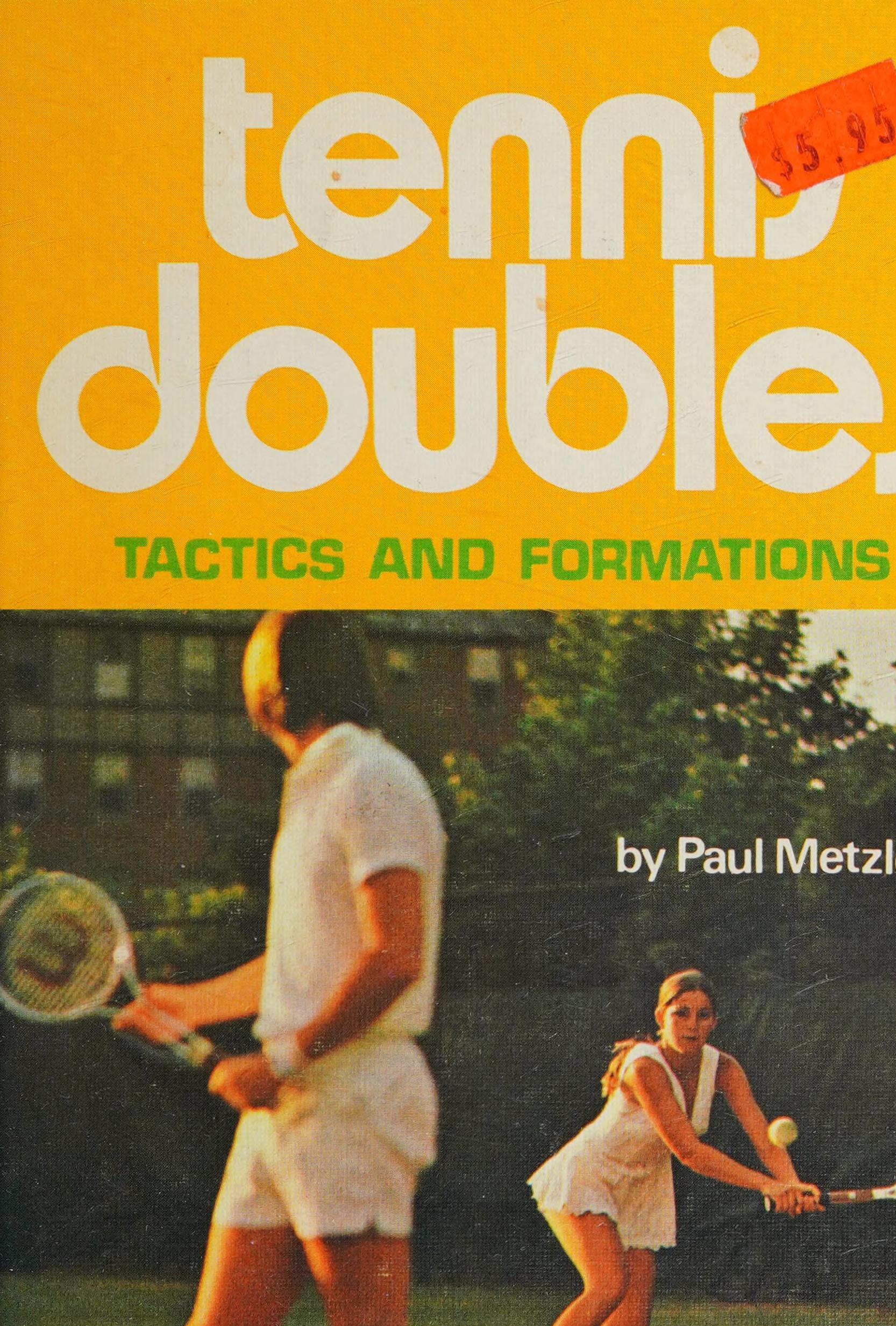
Tennis Doubles: Tactics & Formations
By Paul Metzler · Photography by Martin Rule · Featuring Rod Laver, Virginia Wade, Rosie Casals, Anand Amritraj, Bob Lutz & Evonne Goolagong.
The definitive classic manual for doubles tennis. Contains over 180 pages analyzing court geometry, poach angles, server-partner synchronization, and 40 detailed court diagrams analyzing standard, Australian, and I-formation patterns.

Doubles Strategy: A Guide to Directing the Game
By Françoise Dürr (12-time Grand Slam Champion & International Tennis Hall of Famer) · With George Armstrong.
An authoritative masterclass on creative court direction, partner psychology, anticipation, shot positioning, and pressure execution. Includes 40 full-court tactical diagrams with deep analysis of service return angles, poach timing, and neutralizing power baseliners.
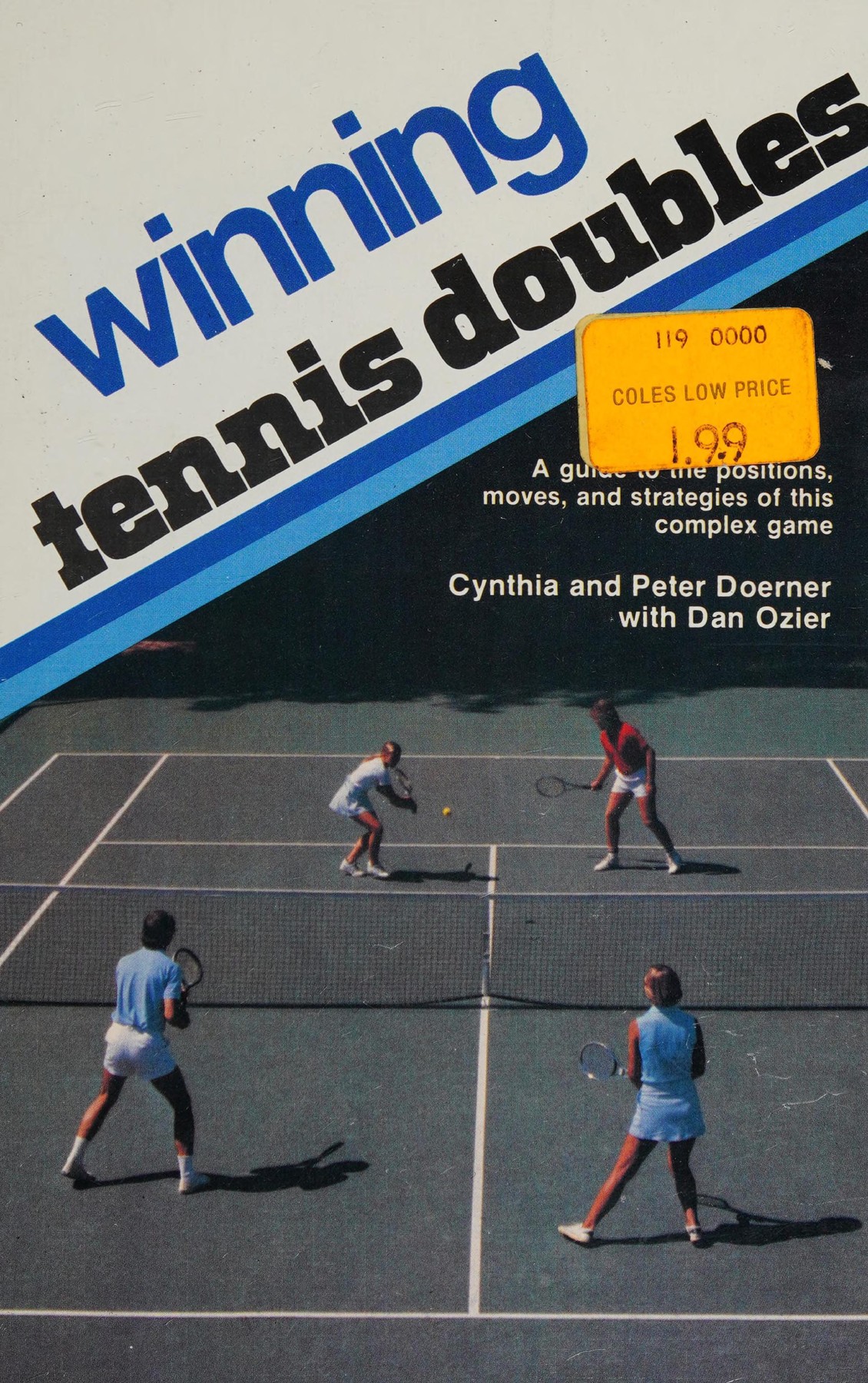
Winning Tennis Doubles
By Cynthia and Peter Doerner with Dan Ozier · Elite touring pros & master coaches.
A groundbreaking manual introducing 'The Magic Triangle'—moving as a synchronized base in harmony with the ball. Features 40 high-angle aerial court action photographs dissecting the server, offensive netman, receiver, and defensive netman roles, plus mixed doubles, lefties, and senior doubles strategies.
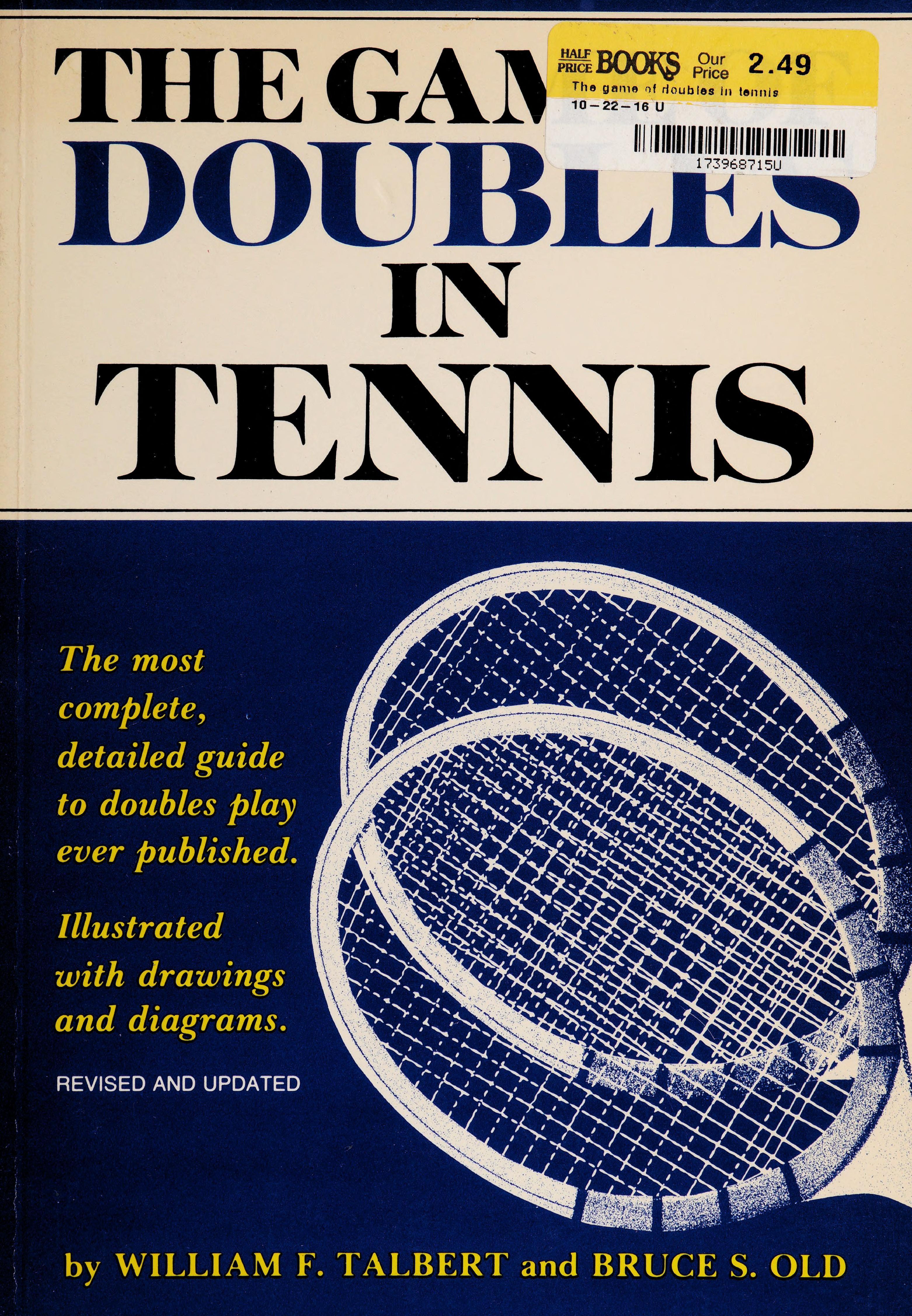
The Game of Doubles in Tennis
By William F. Talbert & Bruce S. Old · Forewords by Arthur Ashe & Virginia Wade · Diagrams by Stephen P. Baldwin.
The undisputed masterwork and most comprehensive treatise ever written on doubles tennis. Culled from seven years of research across thousands of international and Davis Cup matches. Deeply analyzes court geometry, net-rush timing, secret poaching signals, Australian and I-formations, and 112 tactical diagram plays dissecting every nuance from service delivery to close-quarters net duels.
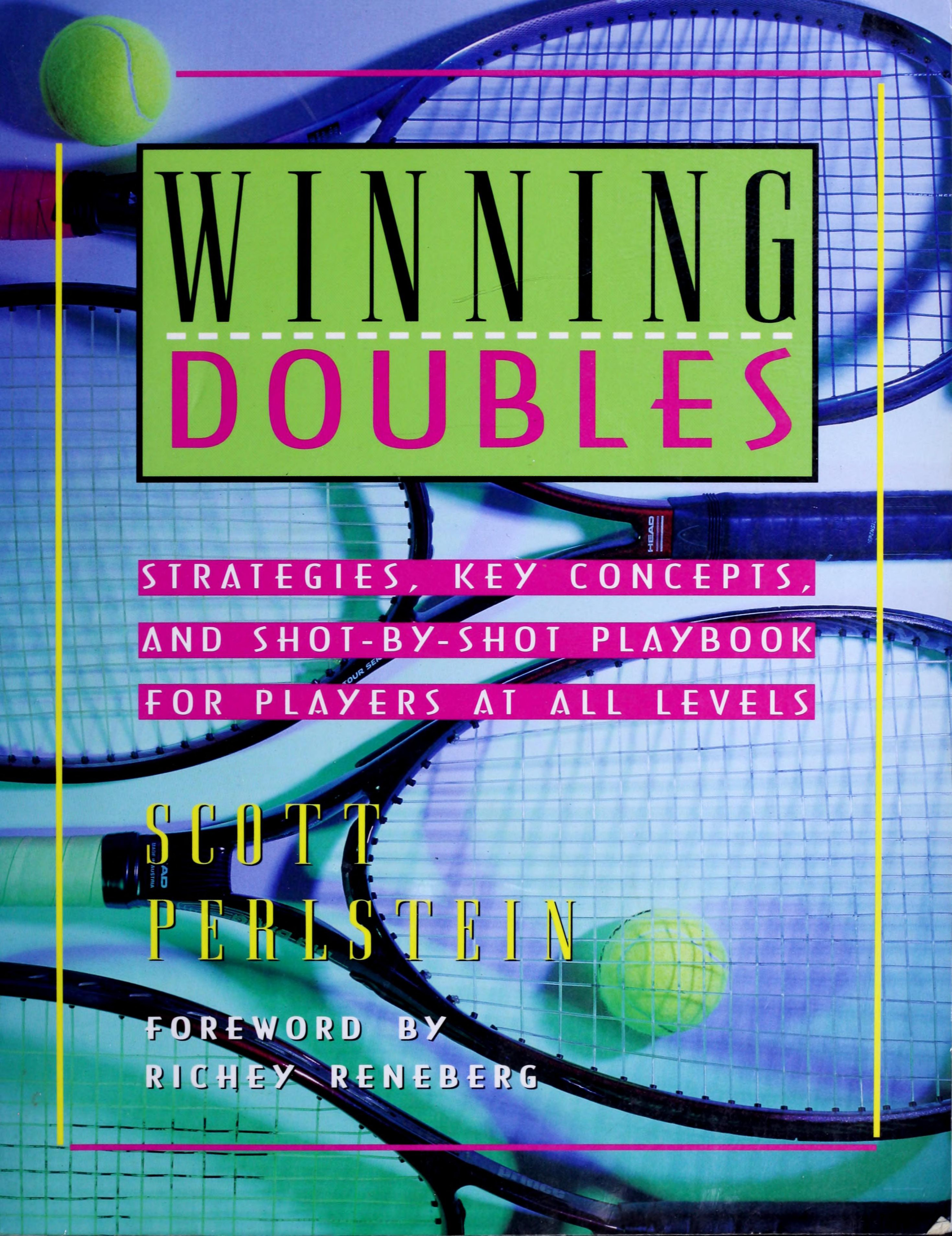
Winning Doubles: Strategies, Key Concepts, and Shot-by-Shot Playbook
By Scott Perlstein · Foreword by Richey Reneberg (Former World No. 1 ATP Doubles Champion, US Open & Wimbledon Champion).
A modern tactical masterpiece designed like a football or basketball playbook. Features the indispensable "Wall" net-control system, movement clocks, hand signals, and 64 comprehensive shot-by-shot tactical play scenarios covering serve-and-volley, poaches, Australian & I-formations, 4-zone depth control, escape lobs, and emergency switching maneuvers.
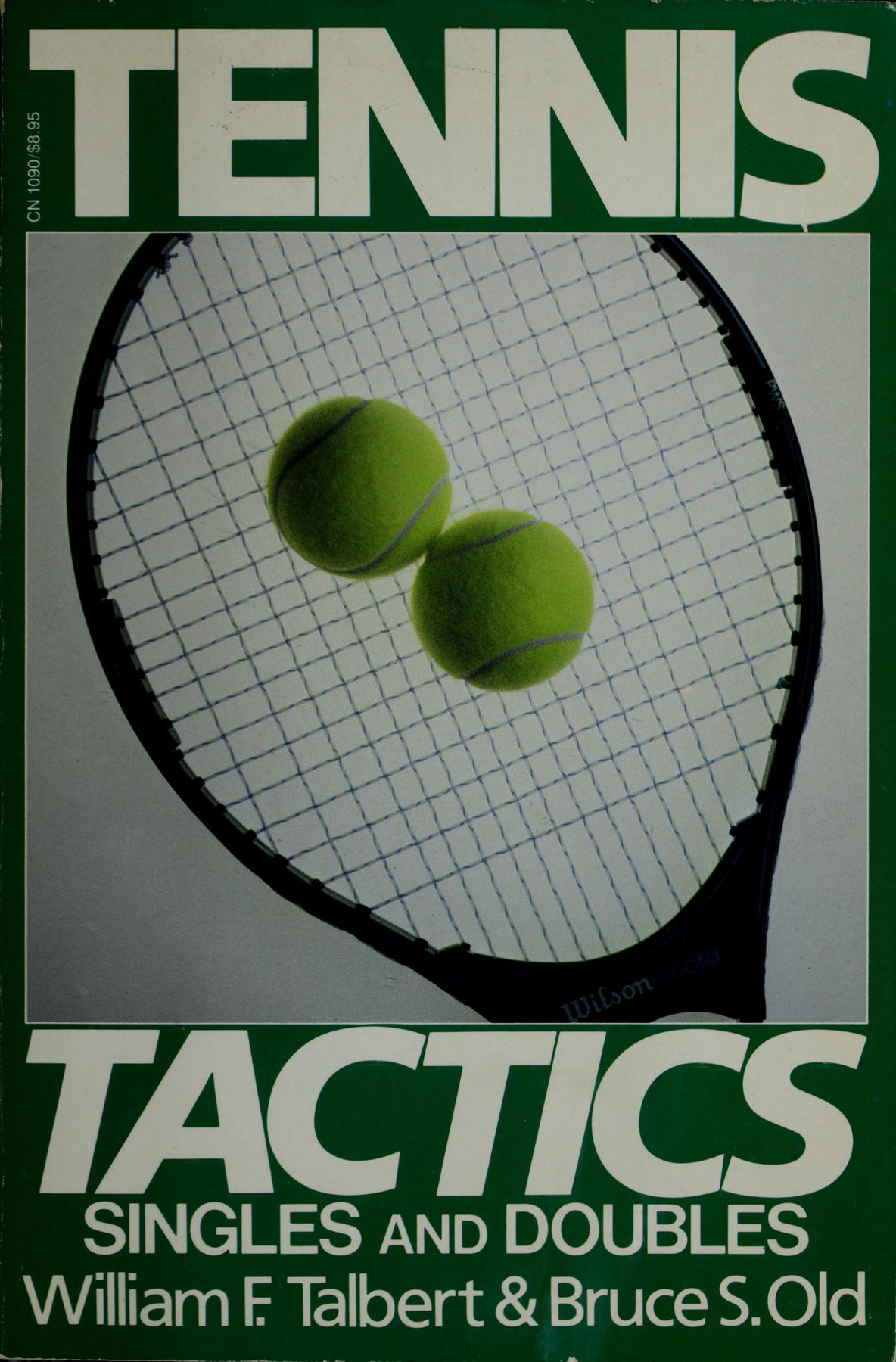
Tennis Tactics: Singles and Doubles (1983)
By William F. Talbert & Bruce S. Old · Drawings by Katharine D. Old · Foreword by Arthur R. Ashe · Preface by Chris Evert Lloyd.
The definitive tactical volume bridging both singles and doubles under one cover. Detailed breakdown of 65 tactical scenarios, the concave volley wall, the four routes to capturing the net, anticipation mechanics, volleying angles, and team coordination.
The Big Idea — Why Doubles is the 50+ Longevity Game
At 50+, the singles court reveals every loss of foot speed, every drop in first-serve velocity, every extra second of recovery between points. Doubles redesigns the problem: you cover half the court, your partner handles the other half, and the geometry rewards placement over pace.
The numbers tell the story:
- Points are 30–40% shorter in doubles than singles — fewer maximal sprints
- Angles are tighter — the crosscourt volley is king, the alley becomes the defender's friend
- Mental load is split — your partner covers the side you're not looking at
- The lob becomes a weapon, not a defense — it resets the point without demanding a sprint
In tai chi terms, this is Hợp Nhất (Unity) — two players moving as one organism. The opponent doesn't see four people; they see two coordinated units covering the court with calm precision.
Communication & Movement — The Foundation (Your #1 Weapon)
Before any formation, before any pattern, before any tactical adjustment, communication is your #1 weapon. At 3.5 level, the team that talks wins — not the team that hits harder.
The 4 Core Calls
| Call | Meaning | When to Use |
|---|---|---|
| Mine | I will play this ball | Any ball on your side |
| Yours | You take it | When ball is closer to partner |
| Switch | We swap sides mid-point | When geometry has flipped |
| Poach | I'm crossing to your side | Server's partner move |
50+ Communication Adjustments
For players 50+, hearing loss and reaction time shift the communication contract:
- Use hand signals — a closed fist = Mine, an open palm = Yours. Loud crowds and adrenaline dull the verbal channel.
- Pre-point calls — agree on serve target before the serve, not during the point.
- Post-point reset — after every point, a quick "Mine / Yours / Lob / Switch" recap prevents drift.
- Eye contact at changeovers — silence at the net means agreement; don't fill silence with chatter that confuses.
The 3 Movement Principles
- Move as a unit — when one player moves left, the other shifts right to cover. Never both chase the same ball.
- Net player is the aggressor — baseline player's job is to feed the net player, not to win points from the back.
- Recover to center after every shot — the moment you hit, take 2 small adjustment steps toward the center mark.
The 3 Formations — When to Use Each
-
Both Up (Australian)
The default serving formation. Both players at the net, server's partner positioned on the same side as the server's likely serve.
When to use: First serve; aggressive first-strike tennis; when you trust your partner's reflexes.
Watch out for: The lob down the alley — your partner has to recognize and call "Switch" instantly.
-
I-Formation
Advanced mixed formation. Server's partner stands at the center T (right on top of the center service line) before the serve, then moves left or right based on the serve direction.
When to use: When you want to hide the poach direction; against returners who like to attack the net player.
Watch out for: Miscommunication between server and partner. Both players MUST agree on which side the partner will move BEFORE the serve motion starts.
-
Both Back
Defensive reset formation. Both players at or near the baseline. Used when you're struggling with return of serve or under extreme pressure.
When to use: Against a dominant server you can't read; after losing 3 points in a row; when wind is affecting lobs.
Watch out for: This gives the opponent TIME to set up at net. Use it as a reset, not a long-term strategy.
The 4 Patterns — How Points Actually Get Won
Pattern 1: Serve + 1
The server serves, and the first volley after the return decides the point. The net player is positioned to poach on any weak return.
Cues: "Serve to the body", "Poach on the second bounce", "Volley to the open court".
Pattern 2: Return + 1
The returner's job is to put the ball at the feet of the opposing net player — making them volley up. Meanwhile, the returner's partner takes the net immediately after returning.
Cues: "Return at the feet", "Move to net", "First volley deep".
Pattern 3: Lob-Recover
When the opponent is at net and you can't pass them, lob over them to buy time to reset the geometry.
Cues: "High and deep", "Topspin if you can", "Recover to center after the lob".
In tai chi terms, this is Lã Kình (Receiving Power) — yielding to pressure redirects it, doesn't fight it.
Pattern 4: Net Battle
When both teams are at net, the point becomes a volley chess match: angled volleys, swinging volleys, drop volleys, overheads.
Cues: "Crosscourt angle", "Punch volley to feet", "High volley to the back".
Drills, Cues, Warnings & The 50+ Reality Check
5 Doubles Drills
- The Communication Drill — Rally with your partner using ONLY hand signals for 5 minutes. No verbal calls.
- The I-Formation Walk-Through — Walk through 20 serves using the I-formation. Both players must agree on movement direction BEFORE every serve.
- The Lob-Recover Drill — Server serves, returner lobs, serving team recovers to center. Repeat 10 times per side.
- The Crosscourt Volley Drill — Both teams rally crosscourt volleys only. Goal: 20 consecutive volleys.
- The Switch Drill — Server's partner starts on the wrong side, then switches to the correct side based on the serve. Repeat 10 times.
7 Common Errors (And Fixes)
| Error | Fix |
|---|---|
| Both players chase the same ball | Pre-point call: "I have middle, you have alley" |
| Net player stands too close to the center line | Stay 2 feet from the center mark until the serve |
| Baseline player hits a winner attempt instead of feeding | Default to high deep balls — winners are the exception |
| Returner doesn't move to net after returning | The returner's job is to get to net, period |
| Lobbing when you should be passing | Lob only when the net player is poaching aggressively |
| Calling "Mine!" but playing the ball anyway | Trust the call — if your partner called it, let them play it |
| Standing still after hitting | Take 2 adjustment steps toward center after every shot |
12 Master Cues
- "Mine / Yours" — every ball, every time
- "Two feet from center" — net player positioning
- "Crosscourt is king" — at 3.5, never volley down-the-line unless the alley is wide open
- "Lob and recover" — when in doubt, reset
- "Switch on the lob" — when the lob goes over the net player, switch sides
- "Feed, don't finish" — baseline player's job is to feed the net player
- "Talk at changeovers" — silence is agreement, but a quick "I'll take their forehand" helps
- "First volley deep" — the first volley sets up the second volley
- "Move as a unit" — when your partner moves left, you move right
- "Hand signals when in doubt" — at 50+, verbal calls can fail
- "Recover to center" — after every shot, 2 adjustment steps
- "Trust the call" — if your partner called it, even if you disagree, let them play it
Tai Chi Parallels
The Doubles Tactics deep dive draws four principles from tai chi:
| Tai Chi Principle | Doubles Application |
|---|---|
| Hư-Thực (Empty-Full) | Net player is Full (aggressor), baseline player is Empty (feeder) |
| Tương Hỗ (Mutual Support) | When one player moves, the other adjusts — never both attack |
| Hợp Nhất (Unity) | Two players move as one organism; the opponent sees one team, not two |
| Lã Kình (Receiving Power) | The lob is yielding to pressure — it redirects force without fighting it |
The 50+ Reality Check
For players 50+, doubles is the most age-friendly format in tennis:
- No maximal sprints — the geometry of doubles rewards positioning, not speed
- Smaller court to cover — half-court responsibility
- Lower-impact shots — volleys, lobs, and angled groundstrokes are gentler than baseline rallies
- Mental engagement — strategy and communication stay sharp; only the body slows
- Social connection — the partner relationship keeps tennis social, not isolating
The 3.5-level doubles player at 50+ who masters communication, formations, and patterns can play competitive, enjoyable tennis well into their 70s — a longevity path that singles rarely offers.
Related Content
-
Reference Library
Coauthored books, TFL Manuals, and tennis books covering doubles strategy in depth.
-
Tennis Technical Reference
Reference articles on Tactics, Volley, Lob & Overhead, and Pressure & Neurology.
-
Specialty Shots
The drop shot, lob, half-volley, and overhead — all doubles-critical specialty shots.
-
Biomechanics & Neurology
Joint chain, motor learning, and pressure inoculation — the science behind positioning and decision-making.
© 2026 Henry Pham · Tennis Future Lab Research · All contents are for educational purpose.