Serve And Volley › Regrouping After You Volley Always return to the ready position after hitting a voll
Regrouping After You Volley Always return to the ready position after hitting a voll
← Back to all chapters in Serve And Volley
Regrouping After You Volley
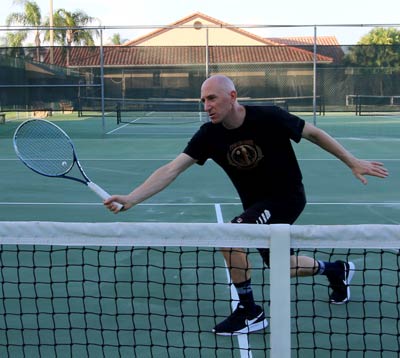
Always return to the ready position after hitting a volley or an overhead. It’s important you get right back into the ready position as soon as possible. Not doing so is the most common cause of missing the net shot. After getting back to the ready position remain alert. Stay on your toes and look like you are ready to move anywhere to hit the ball. This alone will intimidate your opponent and make him miss more often. I find the opposite to be true.
If you stand straight up and flat-footed, your opponent will have a much easier time passing you. Never assume the point is over until it’s clearly over. I see net players often caught by surprise when the opponent hits yet another groundstroke or lob, forcing them to hit a ball when not ready. Play the point until the end. Try to anticipate where your opponent is going to hit the ball by watching how he sets up. Often you can tell if he is going to hit a hard groundstroke or lob in this way.
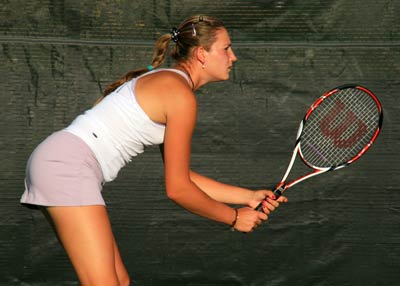
Sometimes you can anticipate direction as well. Learn to have a good eye. This means to be aware when a return might be going out or long. If it’s going out, just let the ball go without touching it. If you are not certain, I recommend you hit it. You will soon develop a feel for where the ball is going.
A Brief Recap
If you’ve read this far, congratulations. You’ve learned a lot of information on the serve and volley game. No doubt, these tips will benefit you for the rest of your playing days. Let’s sum up what we learned and continue on. We saw that a good serve is essential if we want to use the serve and volley game. We have three different serves to choose from. We have three different zones we can serve to.
Once the serve is made and we run in, we can either split step or continue running and use the flowing volley. The path we take into the net is determined by where we serve the ball. If our first volley is hit at us, we can choose four different locations to place the ball. The type of return we receive (varying height, pace and spin) will determine which volley to use from one of the seven different volley types. I think that’s a pretty good summary of how to look at the serve and volley.
There are still a few more points of info to discuss. I’ll try to word them as briefly as possible. Let’s take a look at our specific options for the volley in each case: if you serve out wide, into the body or up the middle.
Your Options When Serving Out Wide
If you serve out wide and receive a return to the middle of the court, you have all four options for where to place the first volley. Location # 1: Behind – This is a volley behind your opponent, which is out wide again. Keep in mind we’re taking a bit of a chance here by volleying near our opponent. How is this location effective? If your opponent is off the court he’ll immediately try to recover to the middle of the court after making his return.
You’ll know he’ll do this because his entire court is exposed. You then volley behind him so that your shot is in the opposite direction of his momentum. This makes it very difficult for him to hit back. After you volley here, slide over to your left a bit to cover anything down the line – just in case your opponent hits a forehand. **Helpful hint: This location works especially well against fast players.
Slower players or lazy players tend to linger outside the court, making it difficult to hit behind them. In that case, simply hit to the open court to easily win the point. Location # 2: At – Firing a volley directly at my opponent can work because I know my opponent will likely move to his left (my right) after returning out wide. My goal on this volley is to hit a fast-paced shot right near his feet.
As the opponent will be on the run, he won’t be able to set up in time to hit a good passing shot. This also catches a lot of players off-guard because they are not expecting a volley right back to them. Location # 3: Ad – Volleying to the open ad court makes sense if your opponent is off the court on the deuce side, as he may be after a serve out wide. If you hit a low, hard volley, you should win the point without your opponent getting a racket on the ball.
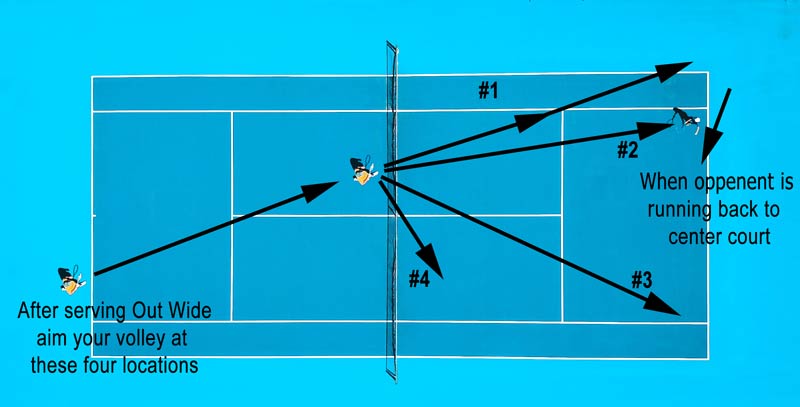
But if hit too soft, then a fast opponent may return your volley. Remember, the opponent is anticipating we will volley to the ad side. If he has the chance to recover, he’ll be sprinting in that direction. Still, it’s the most logical place to hit and quite effective. I use this location when my opponent is way off court or when I want to fatigue him. Location # 4: Drop – I would suggest dropping the volley over the net to your right, the furthest location from your opponent.
But really, this is such an effective technique it will work anywhere close to the net. The key here is to have soft hands and make sure you have a lot of “give” on your racket. If you hold a firm grip, hit the ball too high or too deep, your opponent can run in and easily put the ball away. I use the drop volley around 10-20% of the time when playing singles. In doubles, it’s a little tougher because there is another person at the net.
Your Options When Serving To The Body
When you serve to the body and receive a return, most likely your opponent will remain still. As a possibility, he may move slightly to his left (to the center of the court). We will need to see exactly where he is before hitting our first volley. Hitting out wide to our opponent’s forehand is not preferable here, so it limits us to three locations. Location # 2: At – We can direct the ball right back at our opponent. This is the safest volley to hit for us, because we’re hitting cross court.
But our opponent has a great chance to hit back the ball unless we completely jam them. I would recommend hitting to the two other locations first. Location # 3: Ad – The third location is to the open court on the ad side, preferably close to the sideline. Since our opponent is not off the court, he might be able to get to this volley if not fast-paced or angled off enough. So be ready for a second volley.
Remember, your mentality as a beginner or intermediate player should be that the first volley sets up the second volley for a put-away. Location # 4: Drop – The fourth location is close to the net using a drop volley. The drop volley can be effective anywhere your opponent is, as long as he is returning near the baseline. I should mention that you can try angling off a volley to your opponent’s deuce side. However, beginner and intermediate players might find that a challenge.
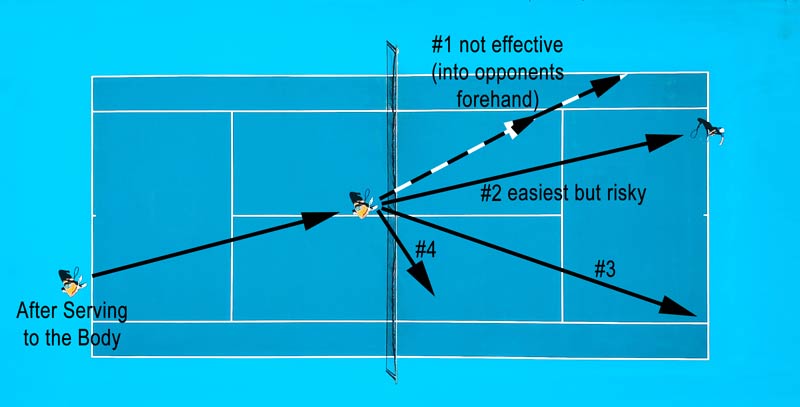
You’ll also be hitting dangerously close to the sideline. Your best chance to angle off the volley to this area is by using a drive or hard punch volley. Anything less and you are hitting into your opponent’s forehand.
Your Options When Serving Up The Middle
A good serve up the middle will stretch your opponent out and put him near the middle of the court. I would not advise you go straight back to him though. From the center of the court there are too many options. He can pass you on either side, lob you or even hit a dipping shot at your feet. Most of the time a good serve up the middle will produce an ace or a weak return, ripe for a put-away volley.
If you do receive back a medium or fast-paced return, use one of these three locations: Location # 1: Behind – Out wide to the deuce side. This will make the opponent scramble to his right to hit a forehand. The benefit is you drag him away from the center of the court to set up the next volley, which will be to the far ad court. The danger here is in not hitting a good enough volley. If not, then you are hitting right into your opponent’s strength, which is his forehand.
It’s important that you move a few steps to your left when hitting here so you can cover the down-the-line shot. Location # 3: Ad – To the far ad court. This will put the volley on your opponent’s backhand side. He’ll have to scramble to hit a backhand pass, which is much tougher than a forehand. This is a safer bet for us and better than hitting to the deuce side (location # 1). After hitting this volley, scoot to your right a few steps.
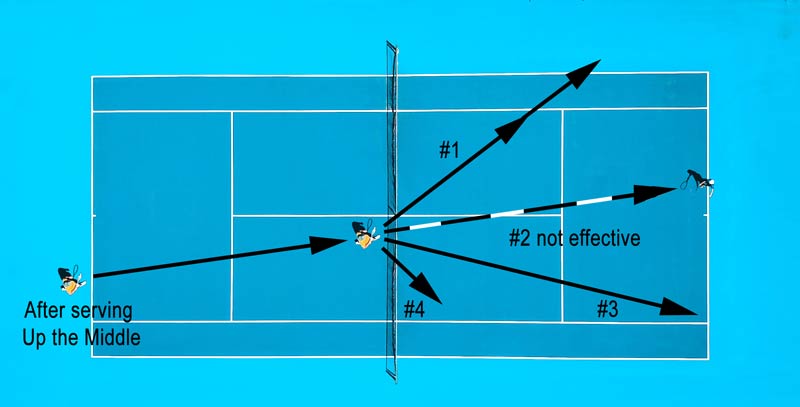
You’ll want to cover any possible down-the-line backhands (which it would come down the right side of your court). Location # 4: Drop – Near the net. Yup, another drop volley. They’re always effective and can really dishearten the opposition. I used to play against a great net player named Seth who had tremendous drop volleys and overheads but not much in between. He could “deaden” almost any groundstroke and place the ball within two feet of the net, where it would die quickly.
There’s just no chance to return a volley like that!
What Happens After The First Volley?
You’ll either end the point with the first volley or not. If the point continues, then hopefully you’ve done enough with the first volley to set up a put away second volley. If not, then you’re in a dogfight, as your opponent is likely scrambling around the court, desperately trying to pass or lob you. Remember to keep getting back into the ready position after each volley. Keep cool and try to anticipate where your opponent is hitting. It’s also vital that you move forward after each volley.
If your first volley is struck at the service line, you should be able to at least take several steps in so that you’re closer to the net for the second volley. The closer you are to net, the more angles you can cut off from your opponent. I should point out that leaving a couple of feet of space from you and the net is advisable. If you play with your nose over the net, you can be very easily lobbed. Not only that, you stand a good chance of hitting the net with your racket or body.
Doing so will automatically lose you to the point. Here is one more important take away when being in a dogfight at the net. Don’t back off the net and attempt to run back to the baseline, please. There’s no time for that, and besides, that behavior is contrary to what we are looking to do here. We want to keep pressure on our opponent and end the point quickly and decisively with a volley or overhead. If it takes 10 volleys to win the point, then so be it.
Keep closing in and angling off the volleys. The only time you should ever back up is when being lobbed.
What About Serving To The Ad Side?
You can use the same strategy of choosing which serve to use and to what location. After serving, you still follow the ball in on the same trajectories, just the reverse of the deuce side. If going out wide, you’ll need to run on the sharpest angle. If to the body, then less sharp. And if going up the middle, then you’ll run nearly down the middle of the court, with not much angle. I want to touch on each location for the ad side before ending this post.
I’ll mention the most important things you need to know about serving to each zone. Again, this all assumes a righty is serving to a righty. Serving Out Wide – This is a great place to serve since the ball is being directed at your opponent’s backhand. Fast, flat serves and kick serves work great in this zone. Most likely you’ll receive back a weak return or floater. If so, don’t even worry about going behind them. Simply hit the return to the far deuce side of the court, far from your opponent.
You can also hit a drop volley on the deuce side. A kick serve to this zone probably won’t get you an ace, but it will most often produce a weak return. A kick serve out wide is one of the safest plays you can make when attempting to serve and volley. Serving Into The Body – Any type of serve (fast, slice or kick) will work in this zone. Most players prefer hitting a fast serve to the body though. Most returns that are directed into the body are weak, making a put away easy.
If you receive back a medium or fast-paced return, you may have the option of hitting back to the ad side if your opponent moves to the middle of the court quickly. But most of the time I recommend volleying to the far deuce side or just hitting a drop volley. Your worst place to volley back to is the middle of the court (right into your opponent’s forehand), so try not to at all costs. Serving Up The Middle – This zone can produce a lot of aces.
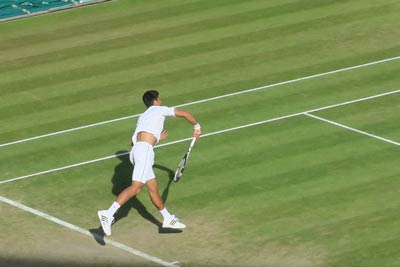
I believe it’s easier to ace someone up the middle than out wide, especially for club players. But, with that said, remember, you are serving right into your opponent’s forehand. For that reason, I do not recommend many up the middle serves on the ad side, unless you serve with a big kick, with a lot of velocity or have excellent placement. Let’s say you receive back a medium-to-fast-paced return. My ultimate play is to hit a drop volley on either the deuce or ad side.
If you can’t do that, here are three other options. Hit a fast-paced volley out wide to the deuce side. Or, do the same to the ad side. One additional option is to hit a fast-paced volley directly at your opponent. Try to edge it slightly more to the backhand side if you can. You do this in the hopes of jamming your opponent and making him miss or send back a weak return.
While this is the easiest volley to hit, you expose yourself in the middle of the net if your opponent can set up for a blast return.
Chip And Charge
Before we wrap up, I’d like to say a few things about your return game. You obviously know the serve and volley can only be employed when you’re serving. But how can we be aggressive at the net while returning serve? The answer is the chip and charge. We can do this off the serve or on a groundstroke. The chip is the slice, which can be done on either the forehand or backhand side. By slicing, preferably to the sidelines, we keep the ball low and make it difficult to hit.
We then charge the net, following the path of the ball. This will drive our opponent’s crazy, as they at least thought we’d stay back when returning. You can also come in on most well-hit or deep groundstrokes. I like to come in on a groundstroke to my opponent’s backhand. Usually, he’ll be on the run when I start coming in. Another play is to hit a looping, topspin shot to your opponent’s backhand and just come in immediately behind it.
Despite returning, there are plenty of opportunities to come to net.
A Final Word On The Serve And Volley
I’m very glad you’ve come this far. Soon the serve and volley game will be second nature to you. With practice, you’ll be winning points from the net with ease. Your opponents will find you incredibly difficult to play and your doubles game will grow leaps and bounds. I want to leave you with a few more tips. I didn’t have a chance to include them earlier in the post, but nonetheless, they are important as well. When serving and volleying, make sure to use a loose grip.
This gives you more snap on the serve and more feel on the volley. Practice your serve often and practice your volleys all the time. I noticed that the level of both declines if not used or practiced. Practice your footwork. Go through your serve and practice moving into net with a split step. Then practice your volley step and your move back for the overhead. Do this many times without using a ball. All that’s required is you and your racket.
Watch youtube videos of the greatest serve and volley players of all time. Notice how they use the techniques and strategies I discussed in this article. Watch the way they play and learn and be inspired by it. Play entire sets where you serve and volley on first and second serve. Try to chip and charge on return games. Come to net every chance you have. Do this against players lower than your level and see if you can win. The more you come to net, the more comfortable you’ll feel.
If your volley game seems like it’s falling apart during a match, use the block volley until your feel returns. The block volley will put the ball back on your opponent’s side of the court and at least make him hit another shot.
Why Serve And Volley Is A Winning Choice At Club Level
by Chad Walner | Want To Dominate Your Opponents In Tennis Quickly And Easily? The lost technique of serve and volley is probably your best option. The serve and volley game was once one of the most feared and effective strategies used at every level of tennis. Nowadays, at the very top levels, the pros have learned some antidotes to this technique, making it less popular in elite play.
For this reason, young, aspiring club players rarely learn to properly respect it–making the technique all the more dangerous at club level!
The serve and volley can be a dominating technique to use at the club level because: It’s an unexpected and demoralizing style to face It breaks the rhythm of good baseline players When playing an opponent who has superior conditioning or a better ground game it can be your only option to get an edge When you can negate your opponents’ strengths at the very start, break their timing, and provoke panic by throwing in the element of surprise, you are setting yourself up for the win.
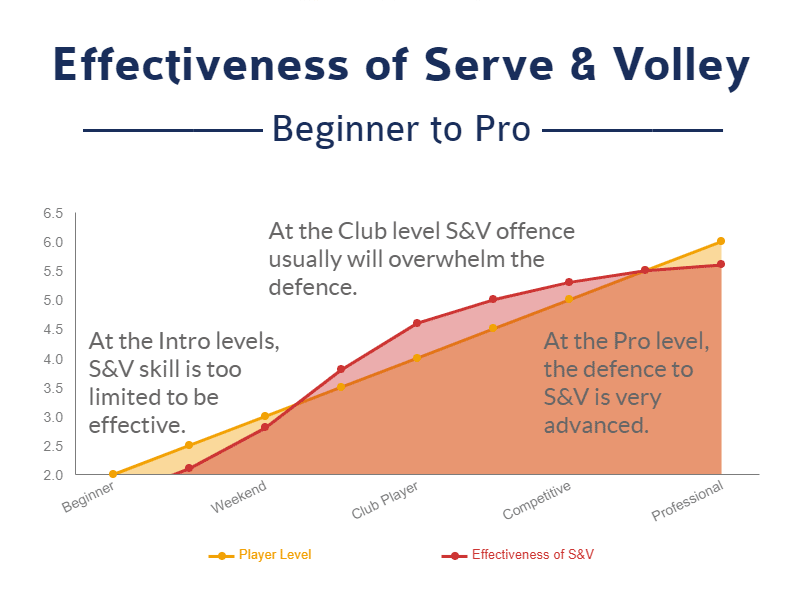
Your training in this forgotten technique can then carry the day before your less sophisticated opponents know what hit them! Outside of the very top levels, the S&V works beautifully and will be your secret weapon against whoever you play. In today’s age, it’s rare to find great serve and volley players. At the pro level, there may be reasons why this strategy has recently fallen out of fashion, but most of these reasons are far out of reach of 99% of your club opponents.
The serve and volley is the most underappreciated technique out there and if you can learn its secrets you’ll be putting points away while the baseline players scramble to adjust themselves to your game. Why not make this proven and effective lost art of tennis a part of your arsenal so you can gain the edge on your competition whether in singles or doubles?
Minimize Their Strengths And Maximize Yours
Most people are perennial baseline players, rarely venturing into the net unless they must. Very few people practice the serve and volley today. The typical baseline player has good groundstrokes (forehands and backhands), is consistent and usually has good to excellent endurance, so if you plan on fighting it out from the baseline, you better be just as good if not better to win the match.
And let’s not forget that if you are playing someone more experienced and/or younger than you, your chances of winning go down even further. So how can we tilt the odds in our favor for winning the match? I have four words for you: serve and volley tennis. The serve and volley happens when you serve the ball (either first serve or second serve) to your opponent and rush the net to pick off the return.
By doing so, you drastically reduce the length of the point and completely negate the endurance advantage of your opponent, since endurance plays a much smaller factor in short points over baseline points. Additionally, since you will be volleying from close to the net, you won’t need to move as much as you do in baseline rallies. Plus, volleys take less energy to hit (being short concise strokes) than groundstrokes from the baseline.
This will preserve your strength and force your opponent to play into your strength, which are your volleys. When you face a younger and faster opponent, they want nothing more than to wear you out from the baseline and cause you to hit an unforced error. Unfortunately for him or her, a surprise serve and volley attack will be their total undoing.
Not only will they not be able to use their strengths, but they’ll also be put on the defensive by your skilled volley attack, causing them to lose the confidence they had at the start of the match.
Steal Your Opponents Time With Serve And Volley
Time is everything in tennis. A split second makes all the difference. In order to hit a great forehand or backhand in tennis, you need the time to set up properly. If that time is cut down by even a half second, it can cause the player to hit into the net, out of the court or miss the ball entirely. This is what great volley players do to baseline players – even great ones. By volleying from close in to the net, your ball comes to the baseline player nearly twice as fast they normally see.
He or she has no choice but to rush into position to hit the next shot. Many times your opponent will end up hitting off-balance or on one leg without good weight transfer. This ends up in an error or a weak shot that can easily be put away by you at the net. And believe me, one of the best feelings in tennis is to end the point quickly and decisively at the net with a power volley or even a drop volley. It completely demoralizes your opponent.
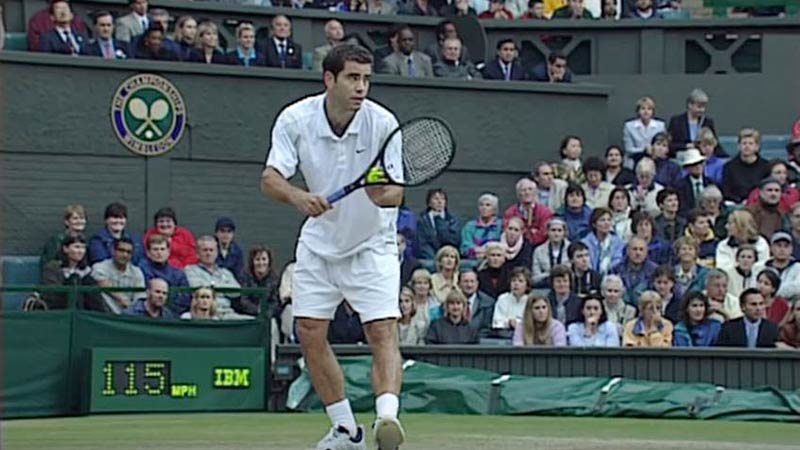
Just watch some of the great serve and volley tennis players of the past like Pete Sampras, Patrick Rafter and John McEnroe and you’ll see how they made their opponents scurry for the ball and feel completely rushed. If you are playing a great player, you may never have the ability to hit hard enough from the baseline to rush them. However, a solid, crisp volley directed to the corner of the court will instill panic in your opponent. Ultimately it steals their time away like a thief in the night.
Neutralize An Age And Talent Gap: Use The Volley.
One of the best ways to neutralize the age and talent difference in tennis is with the volley. In my personal experience, I’ve seen 65 and 70-year-old guys use the volley to beat much younger opponents. Not only that, but their longevity at the club level against much younger foes directly correlates to their ability to volley. However, anyone of any age can learn to serve and volley and use it to win at the club level and in tournaments.
Surprise Your Opponent With The Serve And Volley Game
The element of surprise is with you when you volley. First, your opponent can never sure when you are coming to net to volley. A surprise visit to the net when they least expect it can, and often does, result in an easy volley put away. By changing it up and coming into the net randomly, your opponent will never be sure when and if you are going to serve and volley.
Just when he or she gets comfortable returning your serve by thinking you will stay at the baseline, you sneak in for a volley and pick off an easy return. This is a great way to surprise your opponent. You may also try serving and volleying on a second serve, which will also surprise your opponent. Since few players ever rush the net on their second serve, it is a very underused tactic that can win you key points in a match.
And the difference between a few key points in a tennis match can often make the difference between winning and losing. In a totally different way, the serve and volley creates an element of surprise in that your opponent can never be sure where you are going to place the volley. Maybe you’ll hit a deep volley into the corner where your opponent least expects it. Or perhaps you might angle off a short volley, making it difficult for your opponent to set up a good shot on it.
Or if given the chance, you decide to hit a drop volley (volleying the ball very softly and close to the net). This often completely surprises your opponent, who can’t make it to the ball in time to even put a racquet on it. These serve and volley tactics totally work and I’ve used them in match play, and at the club level. Likewise, they’ve been used on me very effectively as well.
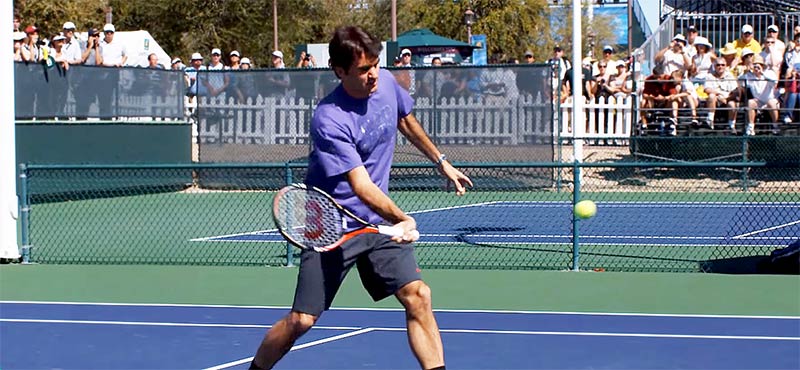
It’s always discouraging when someone wins the point by volley because there’s little you can do to get the ball back on a well-struck volley. When you rally from the baseline, you can hit anywhere, but your opponent has a general idea of where the ball is going by how you set up. He or she generally has a couple of seconds to move to the ball. But the volley can be a total surprise in terms of intended location.
This is mainly because the volley happens very quickly and is a short, concise stroke which is hard to read. Just watch the way a master volley player like Roger Federer handles the ball at the net. Often his opponents are totally caught off guard and can’t even hit back the shot because it’s so good.
Induce Panic: Rush The Net With Your Volleys
An uncomfortable opponent makes mistakes. By forcing your opponents out of their usual baseline rally game, you make them feel uncomfortable and cause them to panic. As they rush to get back your volleys, they feel more and more uncomfortable as the points pass by. Soon they realize that it’s an uphill battle facing you and your serve and volley game. Before long it’s quite possible they begin to mentally pack it in.
Personally, I’ve seen great serve and volley players absolutely demoralize great baseline players. It’s not long before the baseline players are scratching their heads, wondering how they are going to solve the riddle. Unfortunately for them, the end of the match comes before they even knew what hit ‘em! I’ve been on the other side of it as well.
What’s It Like To Face An Effective Serve And Volley Player?
I’ve played players with great serve and volley games and it almost feels unfair. I come to the court with a plan to overpower or outlast my opponent, maximizing my strengths, but am immediately forced into survival mode, desperately reacting as they drive the direction of the game. Their serves come in with pace, placement and spin. I return most of their serves but in the blink of an eye, they are at the net. In a panic, I run to cover the open court.
But a strong volley is hit way out of my reach and the point abruptly ends. This repeats itself the next point and then the one after that. Bam, they got me. The games are flying by and I feel like I can’t even make a dent in my opponent’s serve game. For those who don’t see it coming, this is what it feels like to be on the other side of it. Trust me, it will work great at the club level. Don’t underestimate the power of the serve and volley.
Make it a part of your arsenal and surprise your opponents with this lost art.