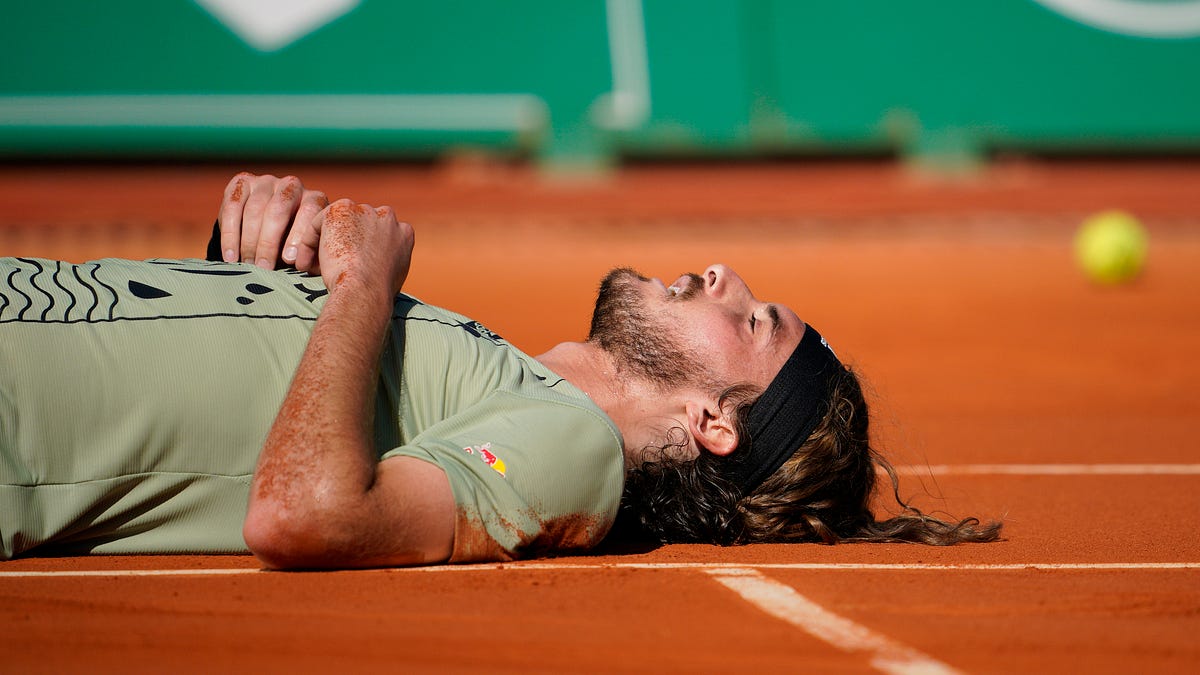
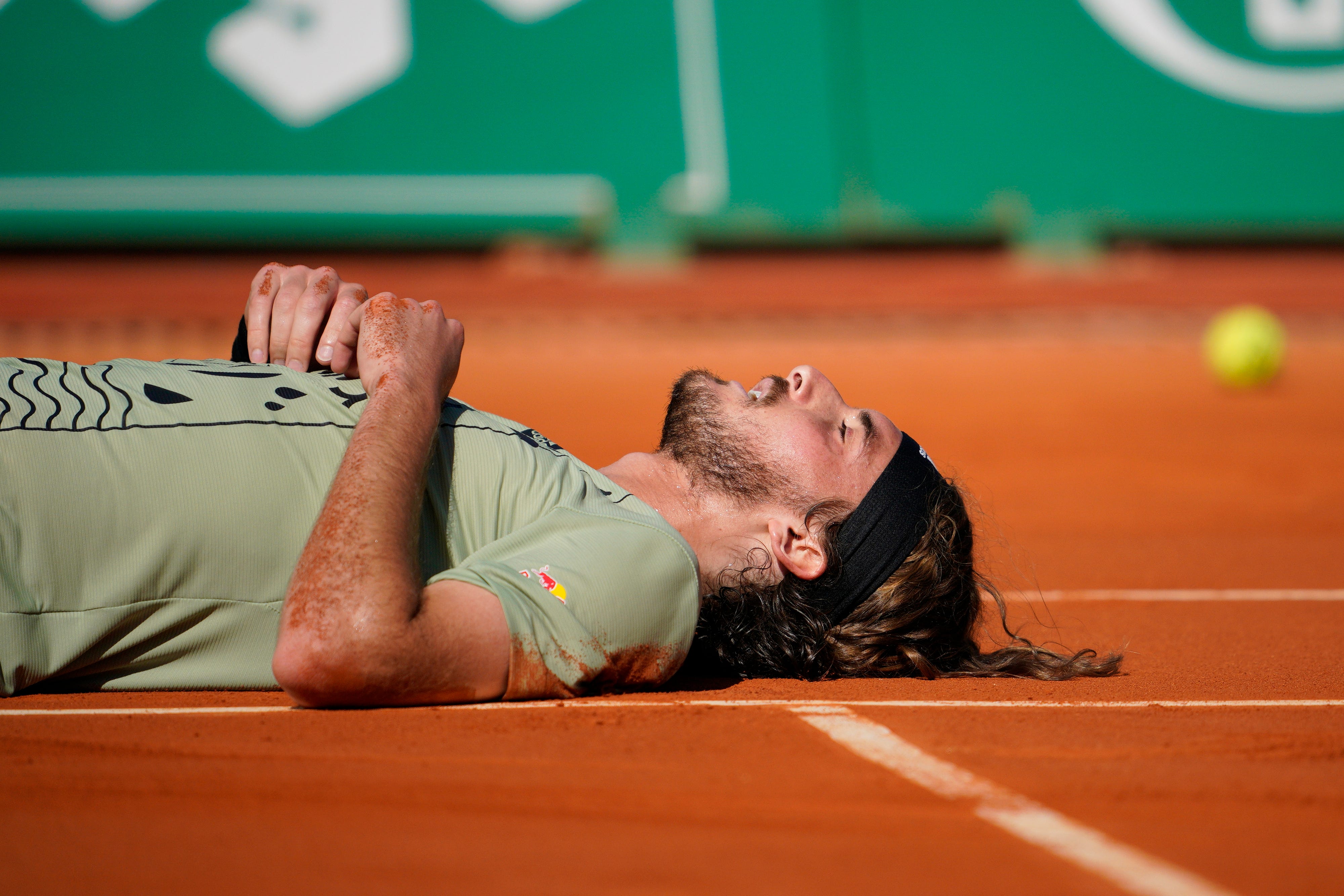
Tsitsipas d Davidovich Fokina: 6-3, 7-6(3)


Tsitsipas has defended his Monte Carlo title, becoming the first Non-Big 4 player to defend a Masters 1000 title since Juan Carlos Ferrero in Monte Carlo in 2003.

He did so thanks to a pretty significant 1st serve and early point aggression advantage.

1st Serve Points Won (large, influential edge):

  • Tsitsipas: 32/45 (71%)

  • Davidovich Fokina: 27/52 (52%)

2nd Serve Points Won (pretty even and less influential):

  • Tsitsipas: 8/16 (50%)

  • Davidovich Fokina: 9/16 (56%)

Unreturned 1st Serves (this is a serving stat, not a returning stat):

  • Tsitsipas: 39%

  • Davidovich Fokina: 12%

Both guys landed a high % of 1st serves, but Tsitsipas won nearly 20% more of his 1st serve points than Davidovich Fokina (Foki), and enjoyed many more of those 1st serves not even coming back in play compared to his opponent (39% of the time compared to Foki’s 12%).

Part of this was down to Tsitsipas’ 1st serve being 13mph faster than Foki’s on average today, and part of it was down to much more aggressive placement:

The main difference here is that on top of much greater 1st serve speed, Tsitsipas is hitting his aggressive spots on 1st serve, with almost none of his serves landing centrally (just 4% on AD side and 5% on Deuce), whereas Foki is really just rolling in safer, slower, central rally-starting 1st serves (red circled grouping). This gave Tsitsipas more free points and offensive options on his serve+1 shot than his opponent, and also meant that Tsitsipas could often hit solid returns.

The Tsitsipas wide serve on the AD side (far left grouping on the above image which made up 71% of Tsitsipas’ Deuce serves) worked particularly well because it set up plenty of Tsitsipas forehands and open court space to hit into:

This wide serve from Tsitsipas (far end) was effective all match long because it opened up court space and provided Tsitsipas with time to be aggressive on his forehand. In this instance Tsitsipas goes back behind Foki cross court, but it’s the threat of the down the line, inside-in forehand which makes this possible, thanks to that space being opened up by the wide serve.

When Foki did put a return in play, Tsitsipas’ first couple of shots after his serve were stronger and more offensive:

N.B: The ‘serve+1’ is the server’s shot after their serve.

Tsitsipas only had to hit one backhand as the follow up shot to his serve in the entire match and it came in the 9th game of the second set (he lost that one point). Tsitsipas also won 10% more of his serve+ 1 forehand points compared to Davidovich Fokina. Tsitsipas getting to hit nearly 100% forehands as his 2nd shot is almost always a good thing for him. It can mean he’s running around his backhand too much but this is usually less of an issue on clay than it is on hard courts due to extra time clay gives players.

What this meant, for the most part, is that Tsitsipas was playing offensive forehands and taking control of points on his serve early in the point. We can see this clearly when it comes to point length:

Tsitsipas dominating the short points on his serve (winning 75% of the 0-4 shot points on serve), and playing more 0-4 shot points than 5+ shot points. And Davidovich Fokina only won 56% of the 0-4 shot points on serve and having to play more of his service points over 5 shots than under.

None of this was particularly surprising. Tsitsipas has a bigger serve and a better, more dynamic forehand than Foki. So while the two players were fairly even for the most part when rallies developed, with Foki able to start working balls into the Tsitsipas backhand corner to try and set up some attackable balls, the short point edge was significantly in favour of Tsitsipas.

Foki fightback

Davidovich Fokina managed to make the match much closer in set two than set one. He returned better and hit his forehand more aggressively early in the point, generally managing to attack the Tsitsipas backhand corner more often and more effectively:

Forehands and backhands by set:

Set 1:

  • Tsitsipas: 47 forehands to 25 backhands (65% forehands)

Set 2:

  • Tsitsipas: 80 forehands to 61 backhands (56% forehands)

But the serve potency and serve+1 effectiveness difference mentioned above came back to haunt Fokina when it mattered most in the 2nd set tiebreaker:

Both players hit one unreturned serve at the beginning of the 2nd set tiebreak. But Tsitsipas won 3/4 of his remaining service points with 1st serves into forehand follow-ups (and hit 100% first serves in the tiebreak overall). Davidovich Fokina won just 1/4 of his remaining service points, only two of them were forehands (including a poor drop shot), and one of them was a second serve (lost).

↑Tsitsipas’ (far end) serve +1 forehand in the crucial 2nd set tiebreaker.
↑ And Foki’s (near end in white) serve +1 forehand in the crucial 2nd set tiebreaker. Tsitsipas got lucky with the net cord but this poor drop shot on a mid court forehand was the clear mistake.

Tsitsipas, back on home soil/brick-dust

It’s been great to see Tsitsipas back on his preferred clay. Not only do his big 1st serve and forehand still work well and penetrate this slower surface, but his weaknesses, mainly backhand defence and return, are seen much less often thanks to the extra time afforded to him on this surface. He can play strong, topspin backhands where he’d have to scramble or rush to a slice on a hard court, and he can camp in his backhand corner playing forehands with less of a worry about being burned down the line. In Miami, just a few weeks ago, we saw Tsitsipas getting punished for camping in his backhand corner hitting forehands. On the clay he gets to dictate from that corner with far more ease, more often.

As for Davidovich Fokina, this has been the best week of his career. His level since beating his idol Djokovic in the 2nd round has been superb, and he should hopefully take solace in knowing that he pushed one of the absolute best clay courters in the world very hard in set two.

The only problem for Foki was that he ran into a player defending what has become his favourite tournament.

— MW
Twitter: @mattracquet

See you on Thursday (Barcelona and Stuttgart draws).

The Racquet goes out twice a week, a (free) piece every Thursday/Friday and a (paid) analysis piece every Sunday. You can subscribe here (first week free):

Give a gift subscription

Read The Racquet in the Substack app
Available for iOS and Android

Top: Manuel Queimadelos/Quality Sport Images/Getty, Bottom: Julian Finney/Getty

Most recent:

The Racquet
Davidovich Fokina Prepared For War
The biggest story of the week so far in Monte Carlo was Djokovic losing in his opening round to Davidovich Fokina. Fokina has now made the quarterfinals, after beating David Goffin in straight sets today, and is playing excellently. Djokovic was reportedly ill…
Read more
The Racquet
Equal pay equal play?
L…
Read more
The Racquet
Backhand Balance
Alcaraz d Tsitsipas: 7-5, 6-3 At the end of the first set, of what was a very high level Alcaraz vs Tsitsipas match last night, I tweeted this (don’t worry about the graphics, I’ll post better versions of them below…
Read more
The Racquet
Barty came, beat the game, and left
Ashleigh Barty, the world No.1, has retired from tennis. She is 25 years old and the holder of two out of the last three Slams, the 2022 Australian Open and 2021 Wimbledon (also winning Roland Garros in 2019). I’m so happy, I’m so ready, and I know at the moment, in my heart for me as a person, this is right…
Read more
The Racquet
The 10% Chance
Yesterday Nadal came back from a double break deficit in the 3rd set against Sebastian Korda in Indian Wells. Korda served for the match twice and was broken twice by Nadal (who happens to be his idol), before Rafa won the deciding tiebreak. Nadal offered up some interesting insights in his post match presser…
Read more
The Racquet
The Big 3 Moat
I usually don’t write about the ‘Big 3’ of Federer, Nadal and Djokovic in any general sense with one recent exception. For the most part, The Racquet is about topical things happening in tennis like matchplay & play-style analysis, or bigger picture developments in the sport. At this point enough attention is already paid to those three players, often a…
Read more
The Racquet
Tennis and the veneer of etiquette
Tennis didn’t properly discipline Karolína Plíšková when she hit and broke an umpire’s chair with her racquet. Tennis didn’t properly discipline Kyrgios when he spat at an umpire and verbally abused him. Tennis didn’t properly discipline Daniil Medvedev when he…
Read more
The Racquet
Too Damn Good
Auger-Aliassime d Tsitsipas: 6-4, 6-2 An extremely easy bit of analysis. Auger-Aliassime (FAA) played flawless tennis and enjoyed a significant serve-return edge against Tsitsipas all match long. The Canadian didn’t dip once. A stunning performance worthy of his first ATP Tour title…
Read more
The Racquet
Defusing the Big Serving Counterpuncher Bomb
I’ve written a lot (probably too much) about the ‘Big Serving Counterpuncher’ playstyle that has emerged at the top of men’s tennis. Medvedev and Zverev, via huge serves and unusually good return and movement performances for their height, can both embody it, and have terrorised plenty of opponents over the last few years with it. But something interest…
Read more
The Racquet
Towering Peaks
It looks like Juan Martín del Potro will soon be leaving the sport. Outside of some Hail Mary medical interventions, Delpo says he’ll likely be bidding farewell to tennis after his matches on clay in Buenos Aires and Rio over the next two weeks. Both events will hopefully offer raucous receptions on the surface he grew up on. I hope he’s wrong about his…
Read more
The Racquet
Tennis AI
I’m going to break one of my own rules today. I’m going to write about Federer, Nadal and Djokovic in a way that makes sweeping generalisations about their playstyles. This is often my pet peeve in tennis coverage: commentators or pundits falling back on the outdated, decade-old stereotypes of Federer as effortlessly balletic, Nadal as the indomitable g…
Read more
The Racquet
The Future Of Tennis - Part 2
NB: This essay focuses on the digital and technological future of tennis more so than things like in-person tournament growth, format changes and participation. More on those soon. Part one is here, it helps but you don’t need to have read it for part two to make sense…
Read more