Świątek d Osaka: 6-4, 6-0
A complete rout. Świątek confirmed her position as the best player in the world and demonstrated the significant hard court improvements she’s made since these two players last met in 2019 (Osaka won that last and only meeting in straight sets).
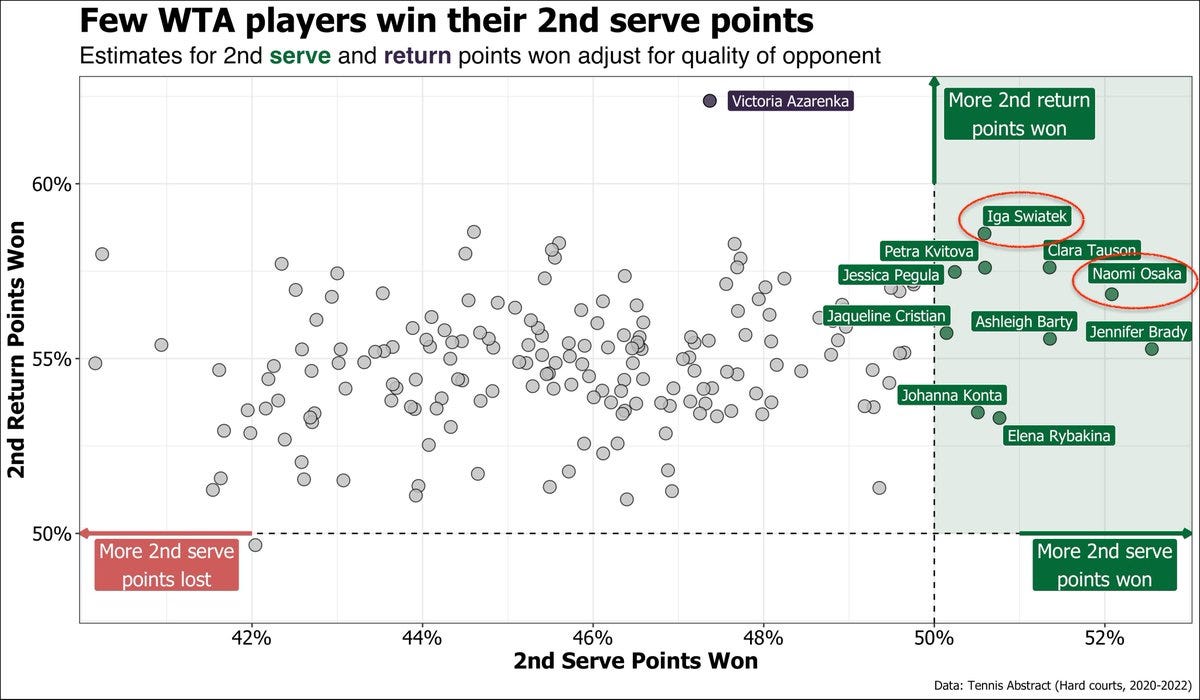
This matchup is interesting because it pits two players out of a relatively small group of WTA players who win more than 50% of their 2nd serve points on avg on hard courts. Something was going to have to give in this regard, and Osaka’s 2nd serve performance got cratered while Świątek’s improved.
2nd points won:
Osaka: 10/30 (33%)
Świątek: 14/21 (68%)
The 2nd serve was important for most of the match, for both players, but especially so in set one where Świątek could barely land a first serve. Despite an underwhelming serving performance for the first half of the match, Świątek didn’t face a single break point and was only pushed to deuce for the first time in the 4th game of the 2nd set!
As the match progressed, Świątek started finding great slice 1st serves on both the deuce and AD sides, which really only made an already bad day at the office for Osaka even worse.
Return strategy
Much was made of Osaka’s extremely aggressive 2nd serve return strategy for the first set and a half of the match:

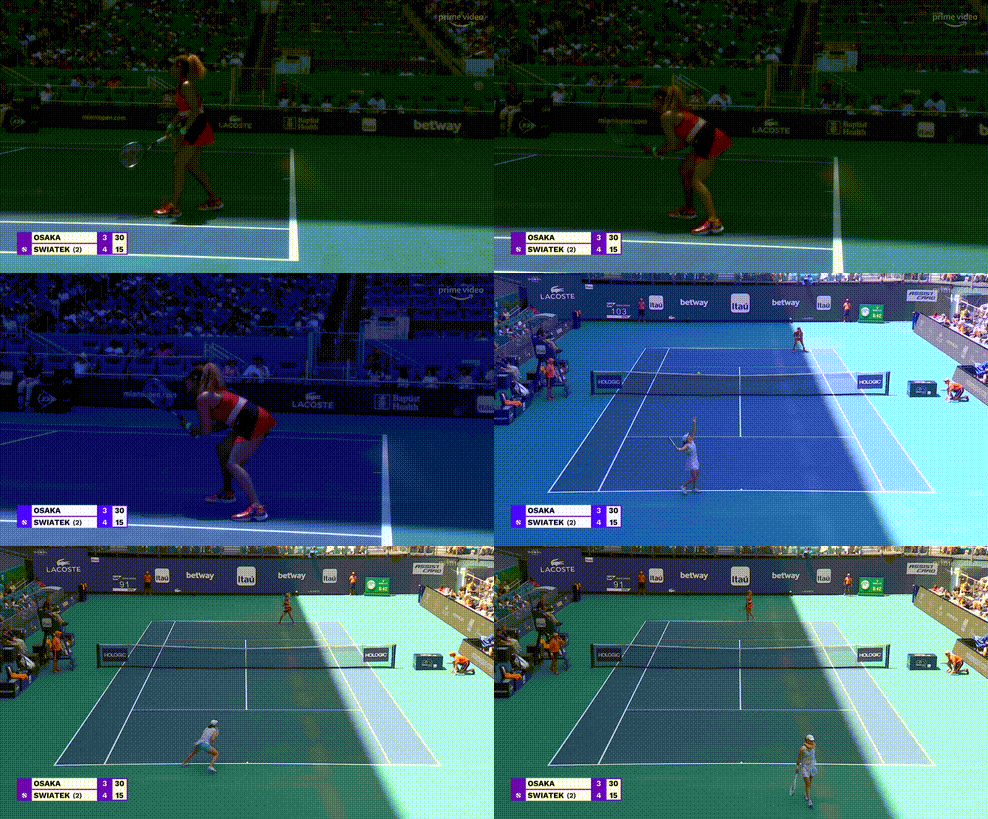
Osaka was trying to absolutely drill returns onto Świątek’s shoelaces. The problem with this strategy however was two fold. Firstly, execution wise, Osaka missed these aggressive returns often. Secondly, when Osaka did connect, Świątek wasn’t consistently bothered by it.

Świątek also produced some very clever 2nd serves under pressure at numerous points of the match today, kicking into Osaka’s body or high to the backhand, which made it harder for Osaka to attack them from her advanced position:
//
Świątek’s 2nd serve returns on the other hand, were near-flawless all match long:

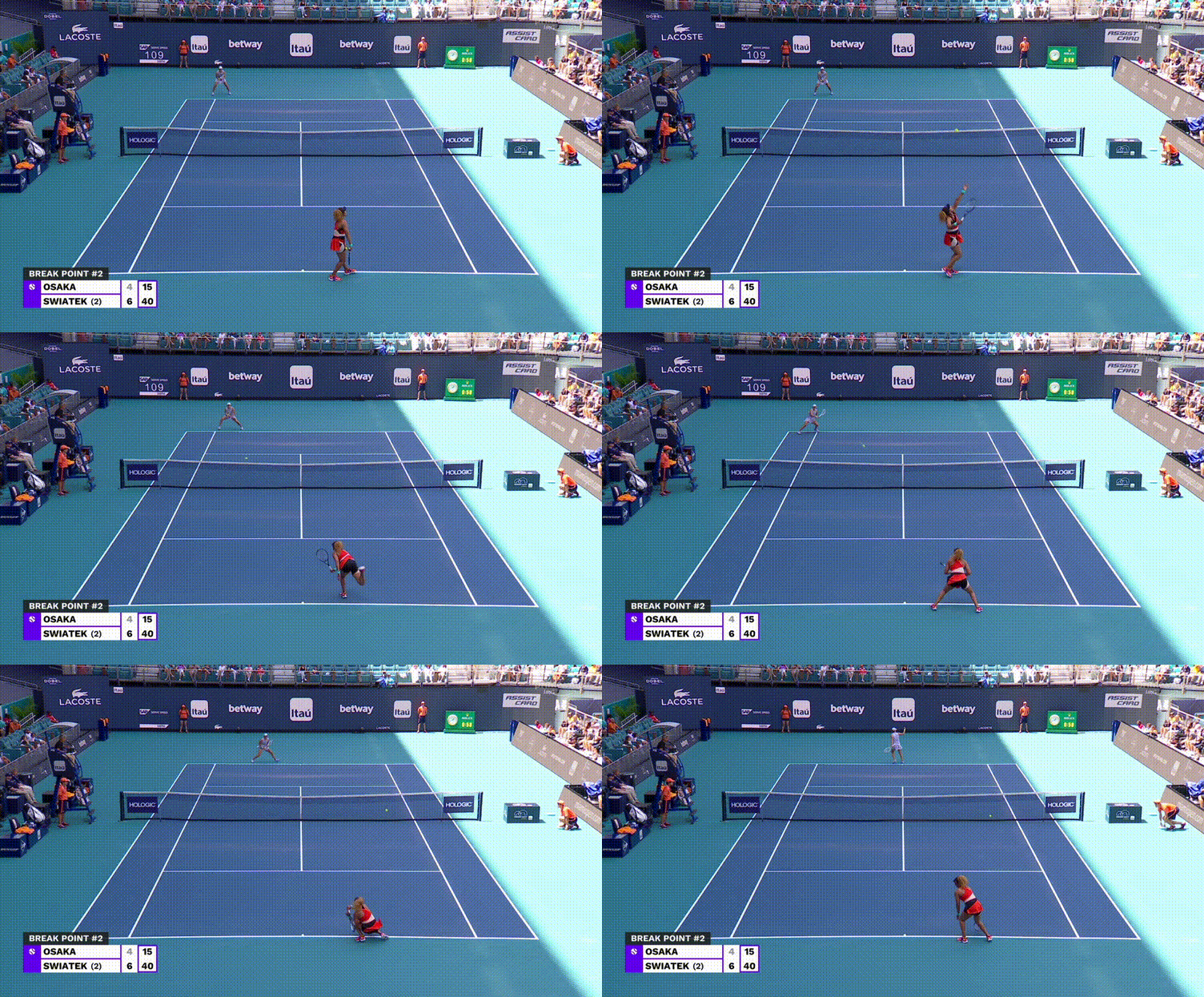
Osaka was trying to target the Świątek forehand with her serve, but Świątek’s forehand returns were excellent. I’ll come onto this in more detail a bit further down, but a lot of why Świątek and Osaka’s fates diverged so sharply despite both trying to be aggressive on 2nd serve returns comes down to how their groundstrokes are hit. Świątek, with her western forehand, can comfortably hit safe but aggressive groundies from further back in the court (notice her return positioning is just behind, or on, the baseline compared to Osaka a metre inside it). Osaka, hitting flatter, clearly felt like she needed the more aggressive court positioning to maximise the effectiveness of her return, but she suffered from a significantly lower margin, higher risk return game. Osaka did move back on 2nd serve return in set 2, but that often exposed her to some of the unfavourable baseline dynamics discussed below.
While Świątek faced 0 break points all match long, all four of the times Osaka was broken came on 2nd serves (including one double fault). Unless Osaka was landing a big first serve, she was losing every area of the battle.
Linear vs angle, pace absorption
This matchup, at least with Świątek’s current set of abilities, isn’t a great one for Osaka compared to how she matches up against much of the rest of the tour. Osaka can beat a lot of her peers with sheer pace and weight of shot alone (both of which are mammoth). But that pace compared to Świątek is often more linear rather than angled. And Świątek is unusually good at soaking up that central pace and redirecting with angles of her own to open up the court.
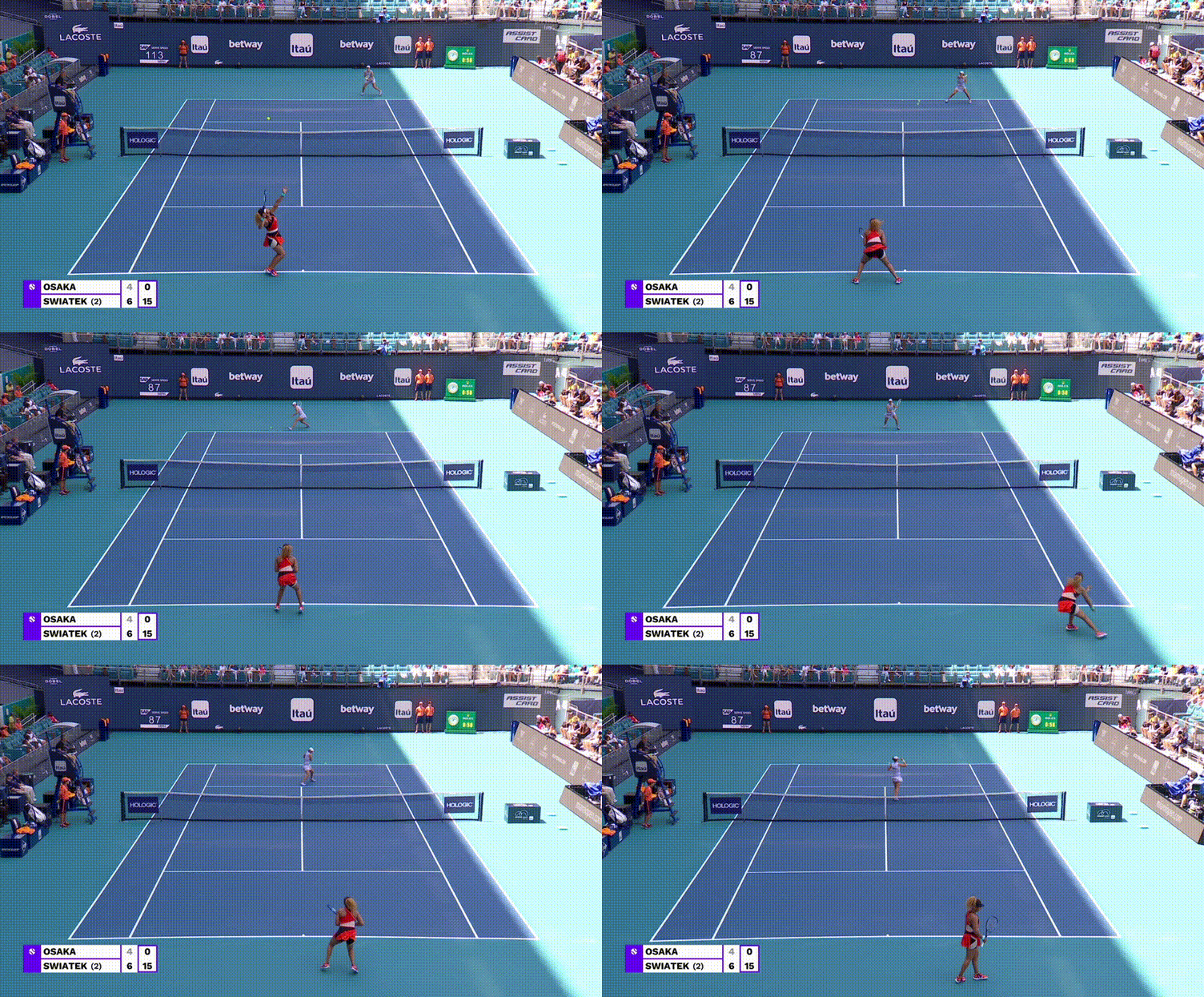
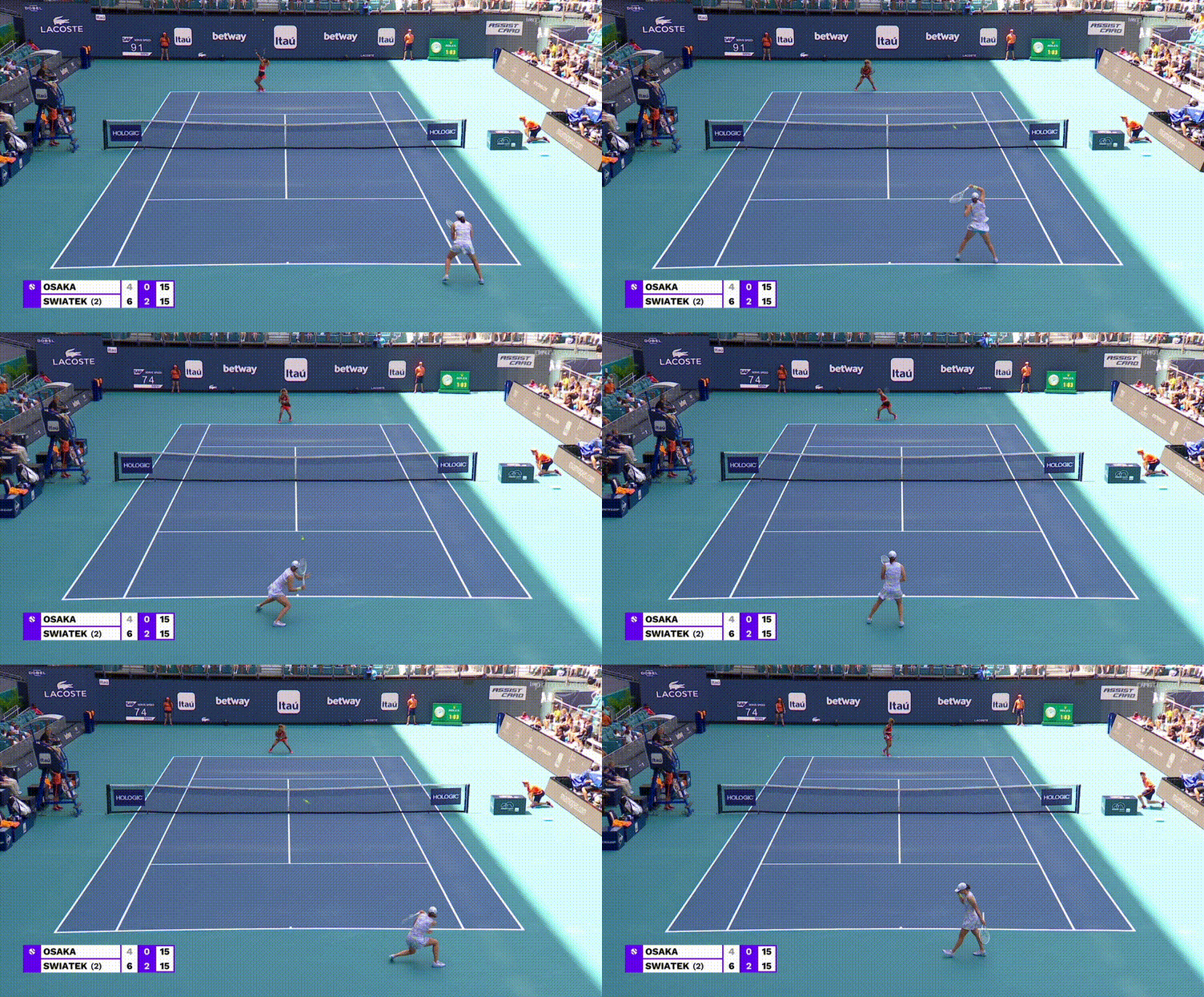
Those last two forehands above, half kneeling, are a significant bit of improvement in Świątek’s hard court game. That ability to get so low, making sure she stays below the ball into contact, helps her mitigate some of the trouble western grip forehands can have on quicker surfaces when rushed into shots.
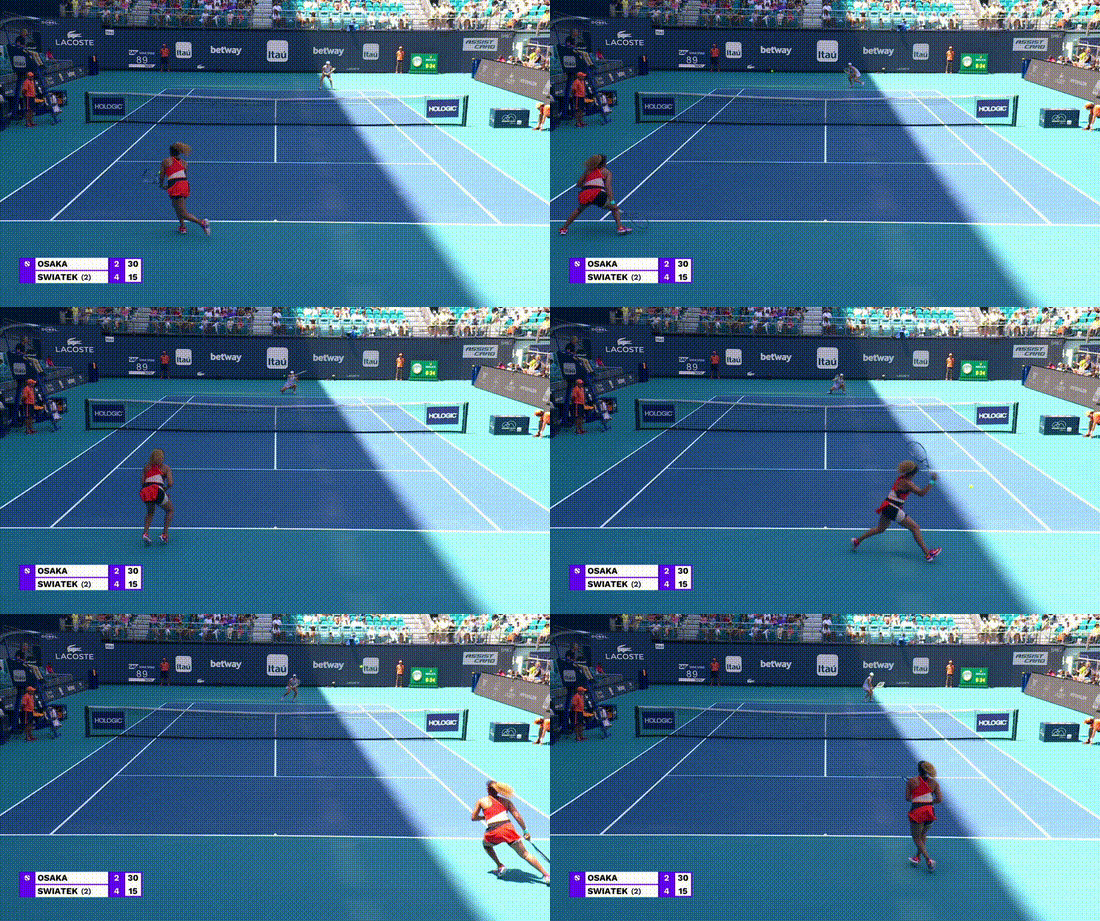
Osaka caught plenty of criticism from commentators for her aggressive 2nd serve return position. But her intent spoke to how little she wanted to get into extended baseline exchanges with Świątek. And it’s tough to blame Osaka considering how dominant Świątek was in that regard. Osaka’s best hope was to take immediate control of points, either on 1st serve or via aggressive 2nd serve returns. The latter didn’t come off today, but it was far from a senseless or misdirected strategy.
Osaka ran into an opponent who is unusually happy absorbing pace and weight of shot — Osaka’s greatest weapons along with her 1st serve — and at transitioning from defence into attack. Świątek’s ability to so smoothly manage that offence to defence transition sets her apart on the WTA right now. Even though I don’t usually like comparing play-styles across the very different men’s and women’s tours, Świątek is the most ATP-like player I’ve seen on the WTA in the last few years. The last 20 years of men’s tennis development has partially focused on players who can hit offensive shots from defensive positions and use sliding hard court movement to shrink the available court for their opponents. Świątek does both these things superbly, better than any other WTA player right now. While Osaka thrives on all out attack, Świątek is comparatively comfortable with both defence and offence and the relationship between them, simply offering the Pole more ways to win matches when at her best. The bad news for Swiatek’s opponents is that her offence is also just as big, if not bigger, than the benchmark for power on the tour right now:
Avg topspin groundstroke speed after the first five games today:
Osaka: Forehand 74mph, Backhand 70mph
Świątek: Forehand 81mph, backhand 75mph
Świątek is not only capable of hitting bigger average groundstrokes than a good chunk of the men’s tour, but she also has that defensive and transitional edge that sets her apart from a lot of her competition. An equilibrium of high level ability.
Osaka will certainly be back in more of these finals, and it’s been great to see her happy and winning again this week. She can also play better than she did today, independent of Świątek’s incredible performance. Osaka’s all-out offensive best is still very much elite and, for much of this week, unplayable, and will still see her contend for plenty more of the biggest titles as long as she’s motivated and enjoying her time on court.
A Sunshine double of Indian Wells and Miami titles for new world No.1 Iga Świątek. And scarily for the field, Iga’s favourite part of the season hasn’t even started yet.
On to the clay.
— MW

Twitter: @mattracquet
See you on Thursday.
You can now read the Racquet on the Substack app (it’s a much better reading experience):

Top: Michael Reaves/Getty, Bottom: Robert Prange/Getty
Most recent:
