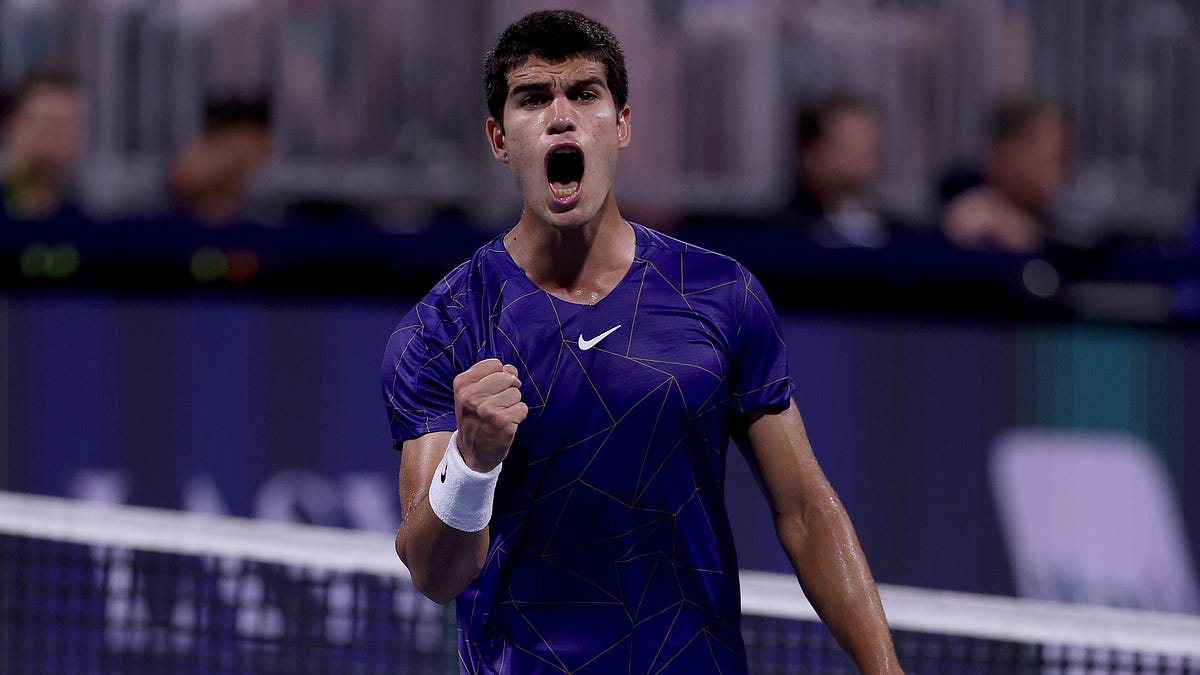
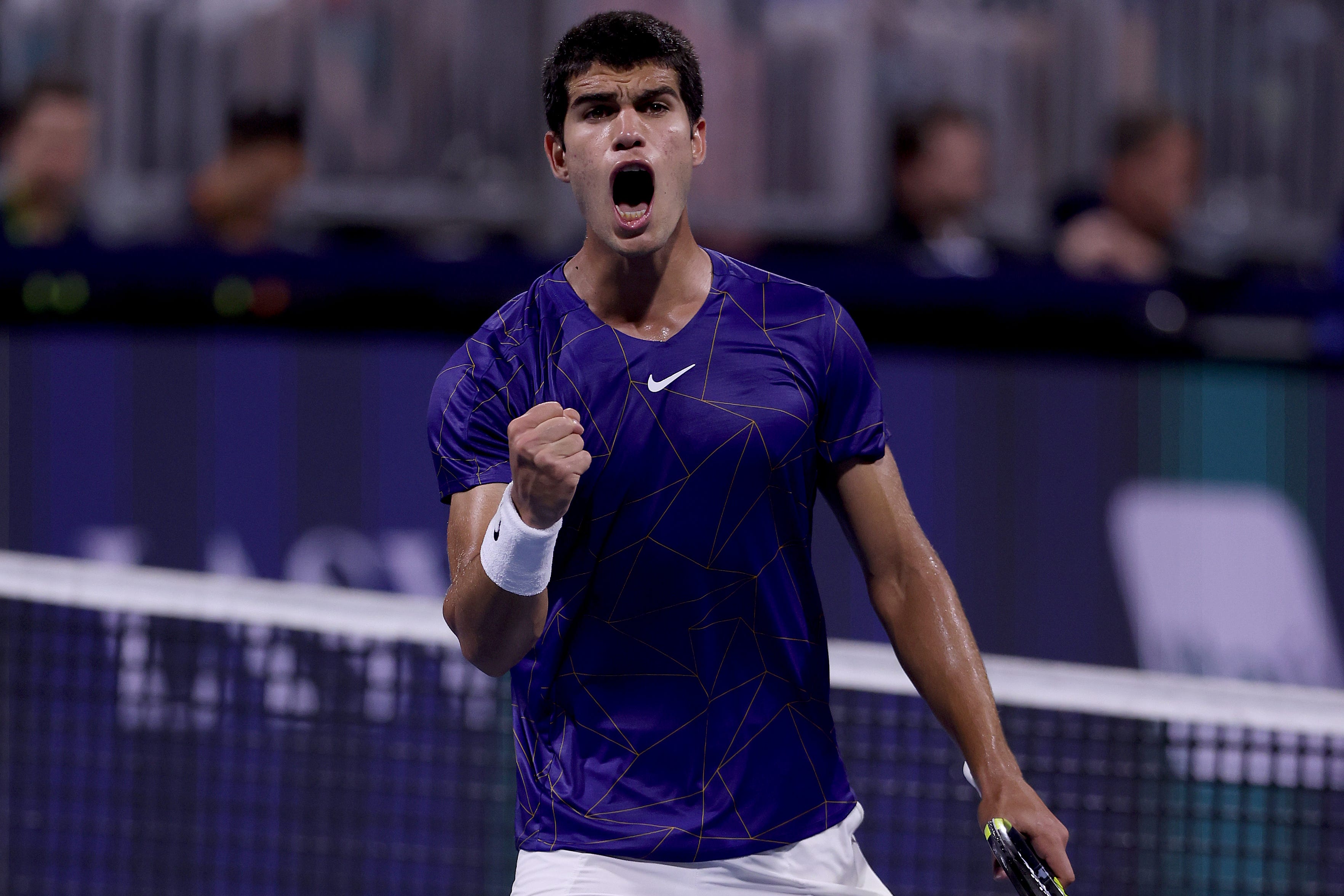
Alcaraz d Tsitsipas: 7-5, 6-3
At the end of the first set, of what was a very high level Alcaraz vs Tsitsipas match last night, I tweeted this (don’t worry about the graphics, I’ll post better versions of them below):


Alcaraz generously decided to make me look far cleverer than I am by identifying this strategy dynamic word for word about an hour later in his post-match interview:
"I tried to hit two or three backhand crosscourt and then switch to down the line - it was the key, I think he lives in the backhand side all the time, looking for his forehand, it was really important, the backhand down the line."
In reality I’ve talked about this exact problem for Tsitsipas on hard courts before. In the build up to his semi-final against Medvedev, this and last year in Australia, I wrote:
3. Thirdly, because Tsitsipas is worried about the backhand to backhand exchanges, he often ends up camping in that backhand corner in order to give him more time to play the backhands or run-around-forehands. This then opens up the line for Medvedev to hit his own backhand down the line which is often easier for double handers than certain single handers.
The balance

The backhand corner battle is a consistent theme in just about every right hander vs right hander battle.
Because Tsitsipas is less balanced from his backhand corner, i.e he is less comfortable playing offence off his backhand compared to Alcaraz, who can quite easily hit offensive cross court or down line the line with his backhand, Tsitsipas ends up cheating further to that backhand side in order to try to get his forehand into play as much as possible. If Tsitsipas can get that forehand into play from his backhand corner, one of his favourite shots, then he has a chance to take control of the baseline rally. The problem for Tsitsipas is that this opens up the line for a balanced player like Alcaraz to hit into:

No.3 (positioning difference) is afforded to Alcaraz by his superior backhand and the resulting superior balance between forehand and backhand potency relative to Tsitsipas.
Backhand winners
Tsitsipas: 5
Alcaraz: 12
Backhand unforced errors:
Tsitsipas: 15
Alcaraz: 7
The risk for both right handed players, when going down the line from their backhand corners, is that it goes into the opponent’s forehand strength. This means that down the line changes of direction usually have to be good enough that they don’t open up space for the opponent to attack cross court:
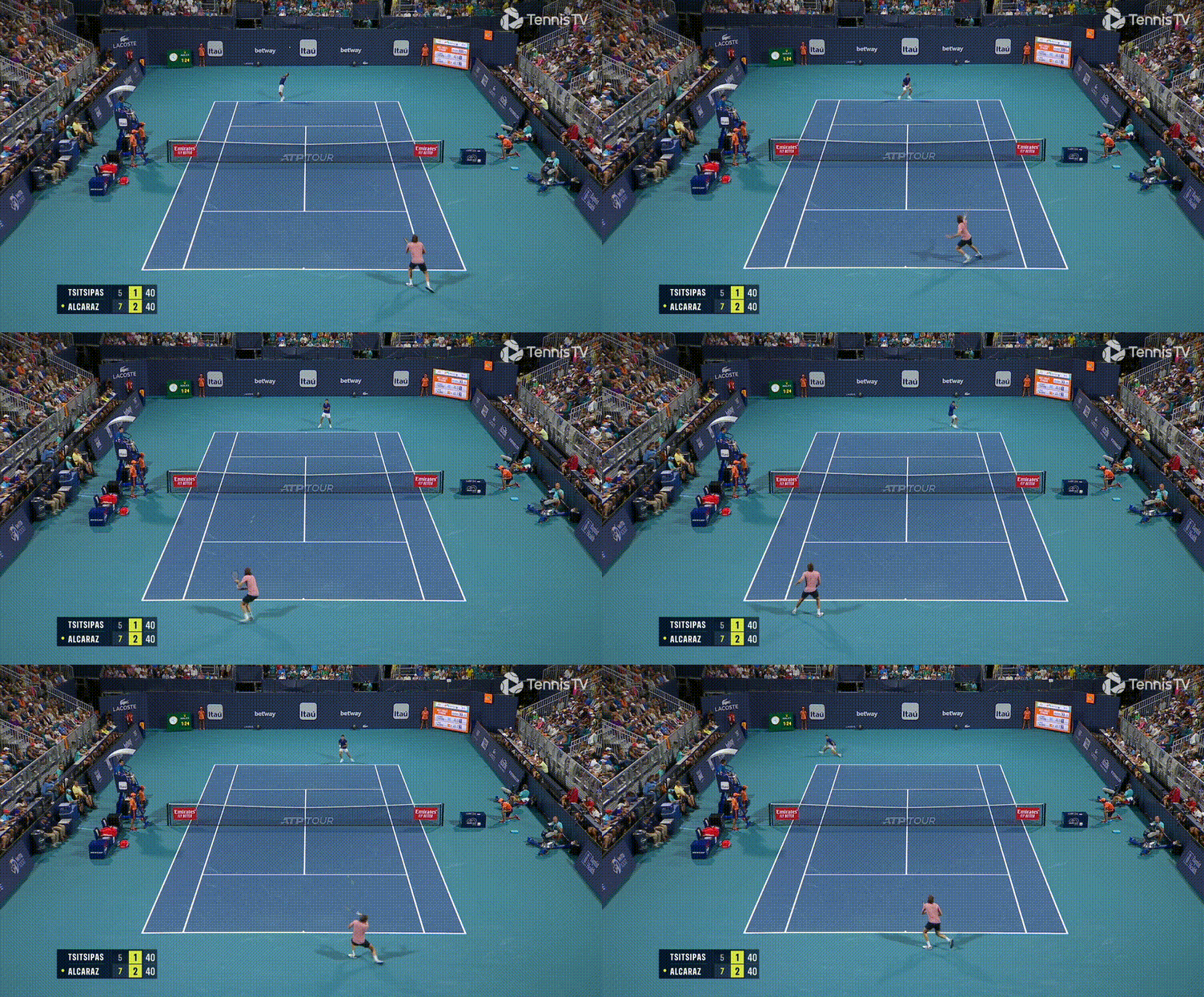
Luckily for Alcaraz, his backhands down the line were consistently excellent last night, to the point where Tsitsipas, desperate to get the ball on his forehand in his backhand corner and so edging further left, couldn’t hit those big cross court forehands too often when it mattered.
This also meant that when Tsitsipas did have opportunities to hit his favoured forehand from his backhand corner, he felt like he had to go huge in order to capitalise and avoid points resetting back into unfavourable patterns:

All of this manifested in Alcaraz dominating baseline rallies. Tsitsipas had a 1st serve potency edge for most of the match, thanks to his bigger and better serve. As such, the Greek, especially for most of set one, was much more comfortable on the shorter points where that backhand corner battle usually didn’t develop.
But in the long points (47% of total points in the match) Alcaraz was utterly in charge:

0-4 shots usually makes up about 65% of points on average. In this match it was close to a 50-50 split between 0-4 and 5+ shot points. On 2nd serve points especially, Tsitsipas’ usual performance was cratered, winning the lowest % of points in his last 12 months of matches and one of his lowest ever at just 28%. Subscribers from last year won’t be surprised by Alcaraz feasting on 2nd serve return!
All four times Alcaraz broke Tsitsipas serve, the break point played was well over 5 shots (8 shots, 9 shots, 10 shots, 8 shots), featuring Alcaraz winning baseline rally battles. Yet another example of the very best players finding edges in longer, not shorter, points. The 18 year old’s world class return affording him the opportunity to get to neutral on the baseline, before enjoying many of the backhand dynamics noted above, was huge.
Tsitsipas, to his credit, did try to mitigate the problems. He tried slices (which in theory are a good way to make it harder for Alcaraz to drive his backhand up the line) and drop shots out of his backhand corner to try and escape the backhand baseline battle. But they largely weren’t sustainable or effective. It also needs to be noted that these problems aren’t universal for all single handers. Tsitsipas’ backhand in particular is less comfortable hitting big down the line than some others (Thiem for e.g). It’s a spinnier shot which, on hard courts, can sometimes mean an easier proposition for opponents like Alcaraz:
Backhand net clearance last night:
Tsitsipas: 34 inches
Alcaraz: 24 inches
A ten inch difference is significant.
Backhand avg speed:
Tsitsipas: 65mph (105kph)
Alcaraz: 70mph (112kph)
Simply Alcaraz had more penetration on his backhand wing than Tsitsipas, both cross court and down the line, and could rush his opponent effectively. This meant that Alcaraz was usually the one able to attack first in those cross court exchanges and could also hit big enough down the line when the space was there.
The upcoming clay season offers up an environment where some of Tsistipas’ problems in the areas above are lessened. The slower surface means Tsitsipas will have more time to run around that backhand and be less rushed when his opponents hits down the line. And it will also help Tsitsipas’ excellent topspin backhand to bounce higher into opponents backhands cross court, meaning less comfortable strike-zones. Hopefully we get another Alcaraz Tsitsipas matchup on the clay over the coming months. Both put on a show last night and it would be really intereresting seeing this matchup on the red stuff.
The funny thing is that chunks of this match were as well as I’ve seen Tsitsipas play in some time. There were very good signs in the form of returns and slice defence. And had Tsitsipas been less cagey when serving for the first set at 5*-3 (Tsitsipas was the better player for most of the opening set), then perhaps this match would have unfolded very differently. But it didn’t, and Alcaraz was borderline unplayable after that point.
There were other factors in this match, like serve placement and Alcaraz’ absurdly good backhand lobs on multiple important points. But the backhand corner baseline battle was the area in which Alcaraz found his largest edge.
The Racquet readers will know that an underlying goal is to paint a picture of the macro play-style environment that makes up the backdrop to elite tennis right now, hopefully helping readers understand why matchups unfold the way they do and what the game and rivalries will look like over the next 5-10 years. Tsitsipas, as the more strength focused player (forehand and serve), ran into the more balanced player last night, and imbalances were exploited. And when you combine that superior balance with the weapons Alcaraz’ possesses, off both wings and at net, you have a scary prospect for the rest of the that enviroment.1
Nextnextgen cannibalising the success of nextgen. It’s brutal out there.
— MW
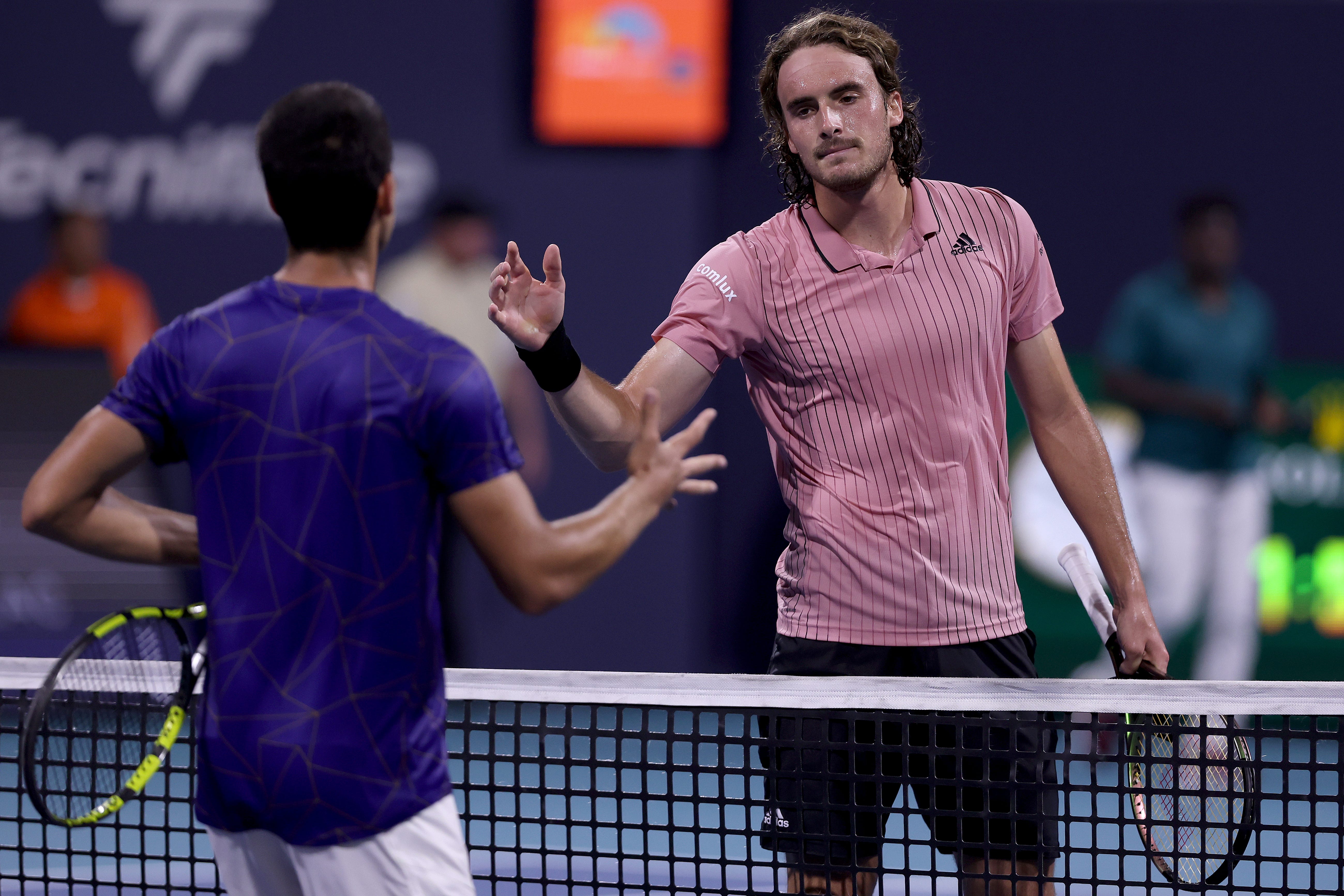
Twitter: @mattracquet
I’ll see paid subscribers on Sunday for Miami final analysis.
The Racquet goes out twice a week, a (free) piece every Thursday/Friday and a (paid) analysis piece every Sunday. You can subscribe here (first week free):

Top and bottom: Matthew Stockman/Getty
Most recent:

An interesting thing about the way Alcaraz matches up against the elite of men’s tennis right now is that his ‘balance’ currently beats Tsitsipas (at least on hard courts), and yet he also in theory has the groundstroke weapons to hit through the other nextgen playstyle, ie the big serving counterpunchers of Medvedev and Zverev (although his serve will be more strenuously tested by those two compared to Tsitsipas). The rest of this year is going to be fascinating to see those matchups clash.