Tennis Racket Sweet Spots › What Part Of The Racquet Should Be Used To Strike The Ball?
What Part Of The Racquet Should Be Used To Strike The Ball?
← Back to all chapters in Tennis Racket Sweet Spots
What Part Of The Racquet Should Be Used To Strike The Ball?
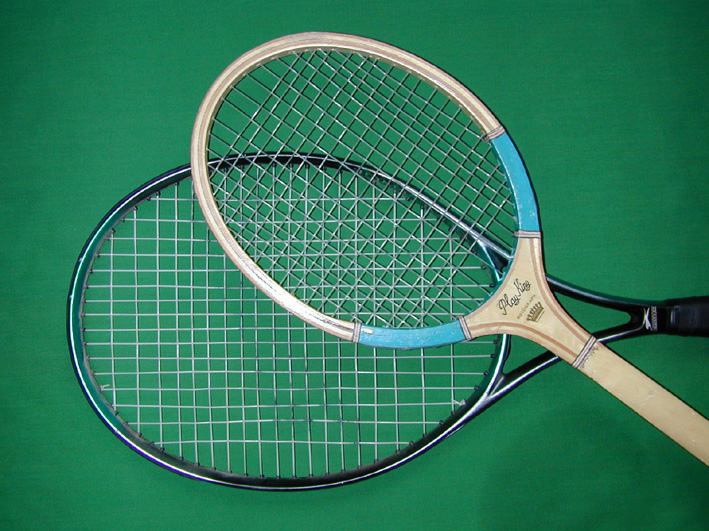
Several games need a racquet for the play to be affected. This includes games like badminton, tennis, squash, and ping-pong. How you hit the ball and the specific location where you hit it will determine the ball’s strength and speed, ultimately determining the game. With that said, do you ever wonder what part of a racquet should be used to strike the ball? If you want to hit the ball with power, you should hit it towards the racquet’s throat.
The throat is the base part of the racquet; here, you will generate a lot of force to the ball. If you want your ball to have a high speed, hit it with the tip of the racquet. To achieve the highest speed, hit the ball with a part of a racquet that produces a combination of the highest speed and the highest power. The optimum speed and power are essential when playing any game that requires a racquet. As a player, you will have to find the right place on the racquet to hit the ball.
If you swing a racquet slowly and hit the ball close to the throat, the increased power will make up the loss of speed. Therefore, it will be ideal to hit your ball close to the throat of a racquet if you want it to move at high speed, even with a slow swing of the racquet. Swinging a racquet at high speed, on the other hand, will require you to hit the ball with the area close to the tip of the racquet. The tip has less strength as compared to the throat.
However, the loss of strength will be covered up with the high speed used to hit the ball, and you will still achieve the optimum speed on the ball. At any given contact position, a variety of power and racquet speed combinations are available. The maximum shot speed set on the racket will vary depending on the combination. These might range from the neck to the tip. Try different locations on the racquet with a tennis ball to see for yourself.
With all the said information, the part of the racquet where you should hit the ball will depend on the impact you want to have on it. When trying to hit the ball closer but with power, you should consider hitting it with the racquet’s throat. Otherwise, it would help if you hit it with the tip of the racquet for you to achieve the speed you want on the ball to send it to a distant location.
Difference Between Accuracy And Precision While Using a Racquet
At times, accuracy and precision may be misinterpreted. Precision measures the repeatability or reproducibility of the measurement. Accuracy, on the other hand, indicates how close the measurement findings are to the actual target. Because tennis shots aren’t always flawless, we prioritize accuracy above precision. Great precision in tennis means that our strokes are equally distributed around the target but not too close together.
This is because you are hitting a moving round ball with a moving racquet, and we’re typically moving. Except for serving, being accurate in a fast-paced sport like tennis is simply impossible. We may be considerably more exact when we serve. We’re not moving, we have control over the ball’s placement, we’re always the same distance from the net, and the measures of the service box, court, and net are all the same.
The easiest method to increase the accuracy and precision of your tennis strokes is to change your goal rather than your technique. Instead of altering your stroke, if you aim into the target and your shot lands to the left, aim for the target’s right side. Your next shot will almost certainly hit the mark, and your brain will recognize the misalignment and swiftly correct it. This will create an automatic correction to your next stroke.
Best Way To Control The Ball With The Racket
The player must regulate the pace with which the ball is stroked. Ball speeds put additional pressure on an opponent because they shorten it takes to get at and prepare for the stroke. Ball speed also limits the opponent’s options and complicates the shot’s execution. The disadvantage of ball speed is that the margin for error is narrower, making ball placement more challenging to control. The speed and spin of the ball following a stroke are both tightly and inversely linked.
The more direct the hit between the ball and the racket, the faster the ball leaves the racket, yet the more glancing the collision, the more spin. Putting the right spin on the ball may reduce the margin for error in a stroke and alter the ball’s bounce. All tennis shots, even flat serves and groundstrokes, include some ball spin. However, the higher quantities of spin created by racket trajectory changes at contact have the most dramatic impacts on ball flight and bounce.
The racket’s upward motion causes topspin during impact. The racket path is from low to high through contact for powerful topspin forehands, typically between 40 and 50 degrees upward. Remember that the steeper the racket path, the less the margin of error in contacting the ball and the slower the tempo. Depth is one of the essential shot placement goals.
Strokes along the baseline are considerably more challenging to return, limit the angles an opponent may play, and provide a player with more time to recover for the following stroke. Topspin players must use caution to maintain their depth throughout rallies. Aiming groundstrokes high above the net is one of the most acceptable methods to gain depth of placement.
Under pressure, players who hit the ball flat may choose not to lift shots over the target instead of aiming near the tape, resulting in shots that lack the depth required to prevent their opponents from attacking.