Arthur Fils defeated Frances Tiafoe 6-3 1-6 6-0 in the final of the Cincinnati Masters on Sunday to claim his first 1000s title. The win catapults the Frenchman to 5th in the ATP Race to Turin despite missing two slams this year due to injury.
Arthur Fils and Frances Tiafoe are two of the most talented and exciting players on tour, but this was a match that ultimately didn’t deliver as a spectacle; neither man played well at the same time, rallies were short, and the sets weren’t close.
Still, I think the match was a useful exercise in exploring why Arthur Fils seems to have so much more potential than Tiafoe ever did.
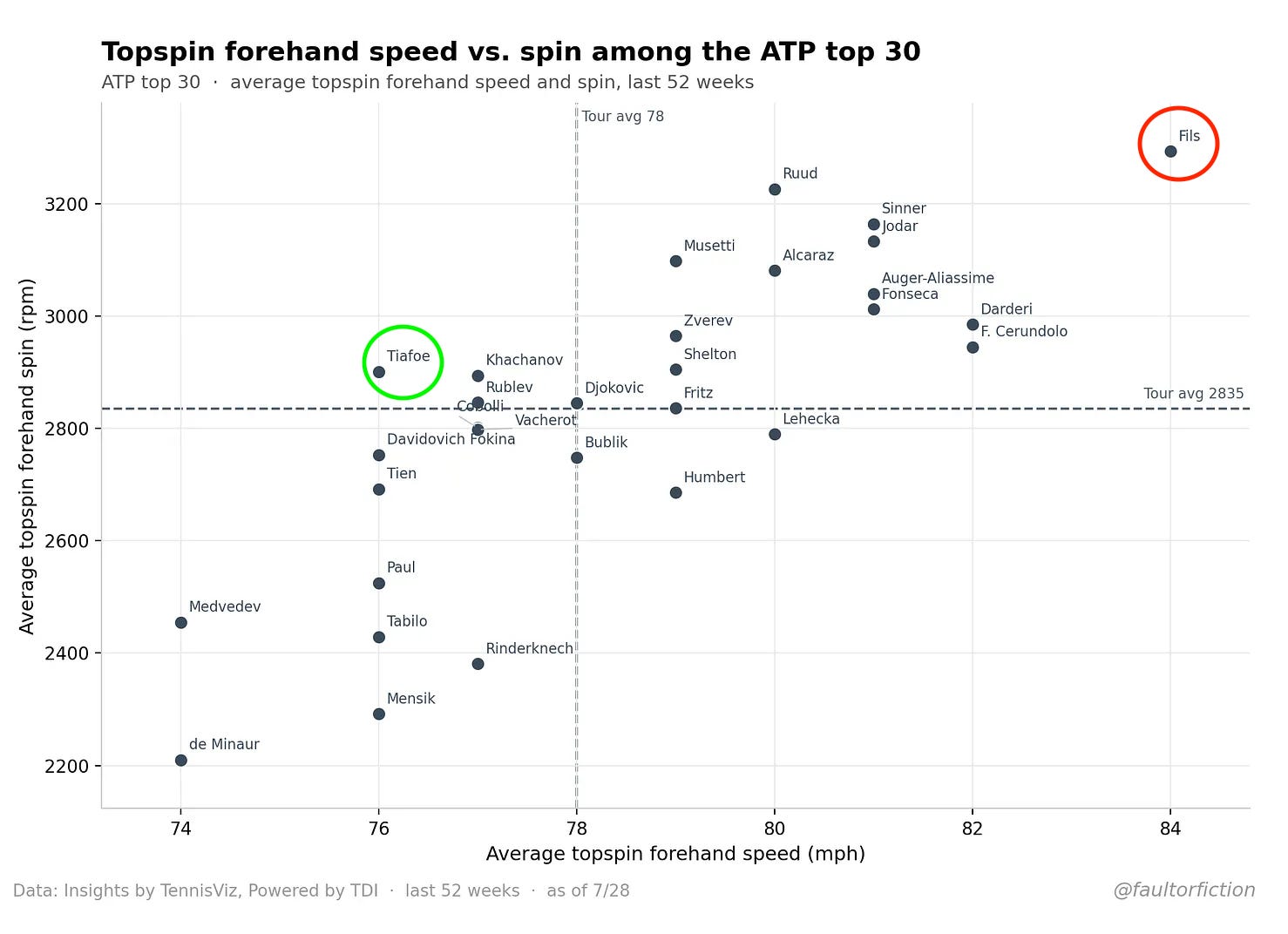
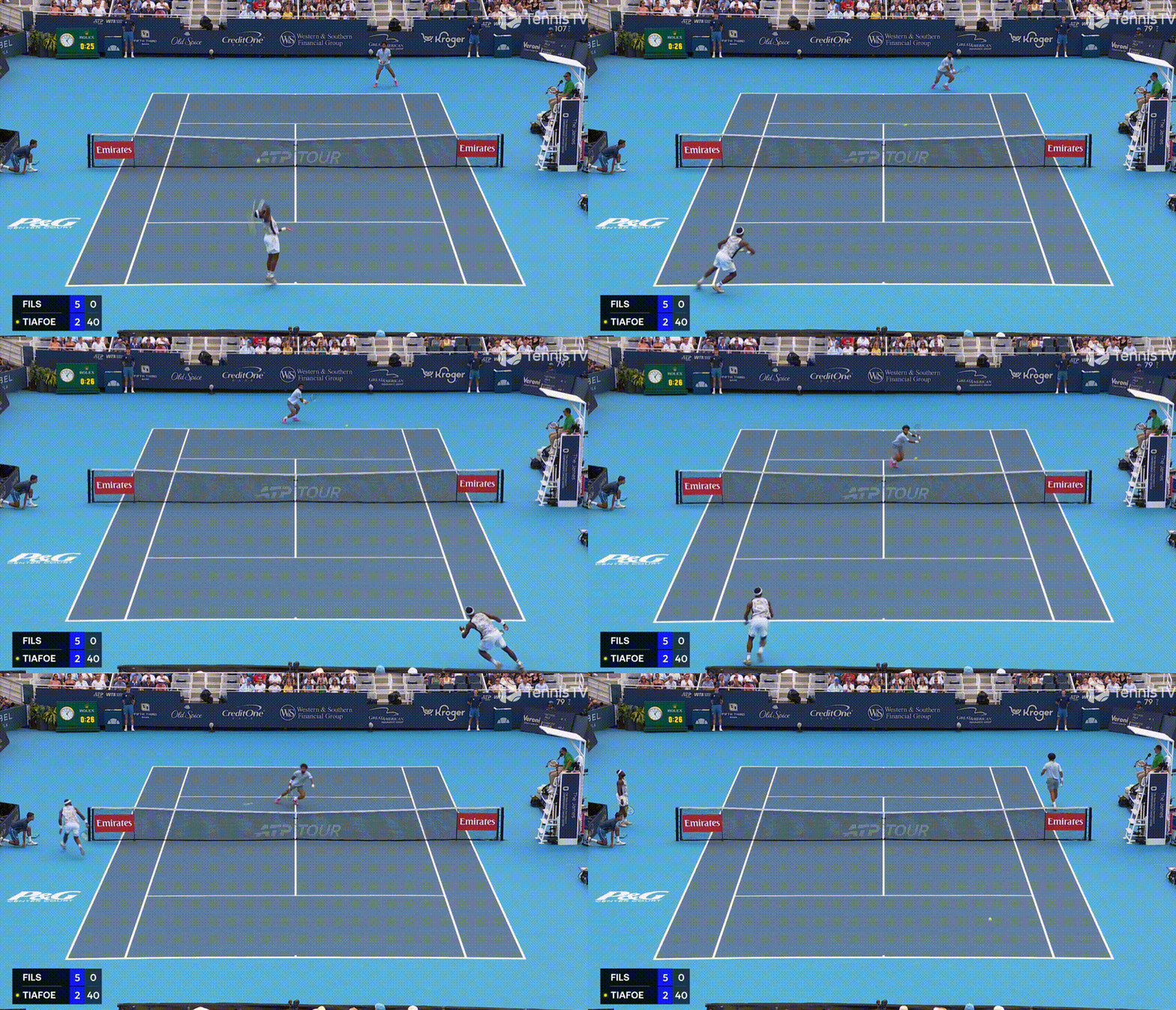
The most obvious answer is that Fils owns the world’s biggest forehand. A fact he made apparent in the early exchanges:
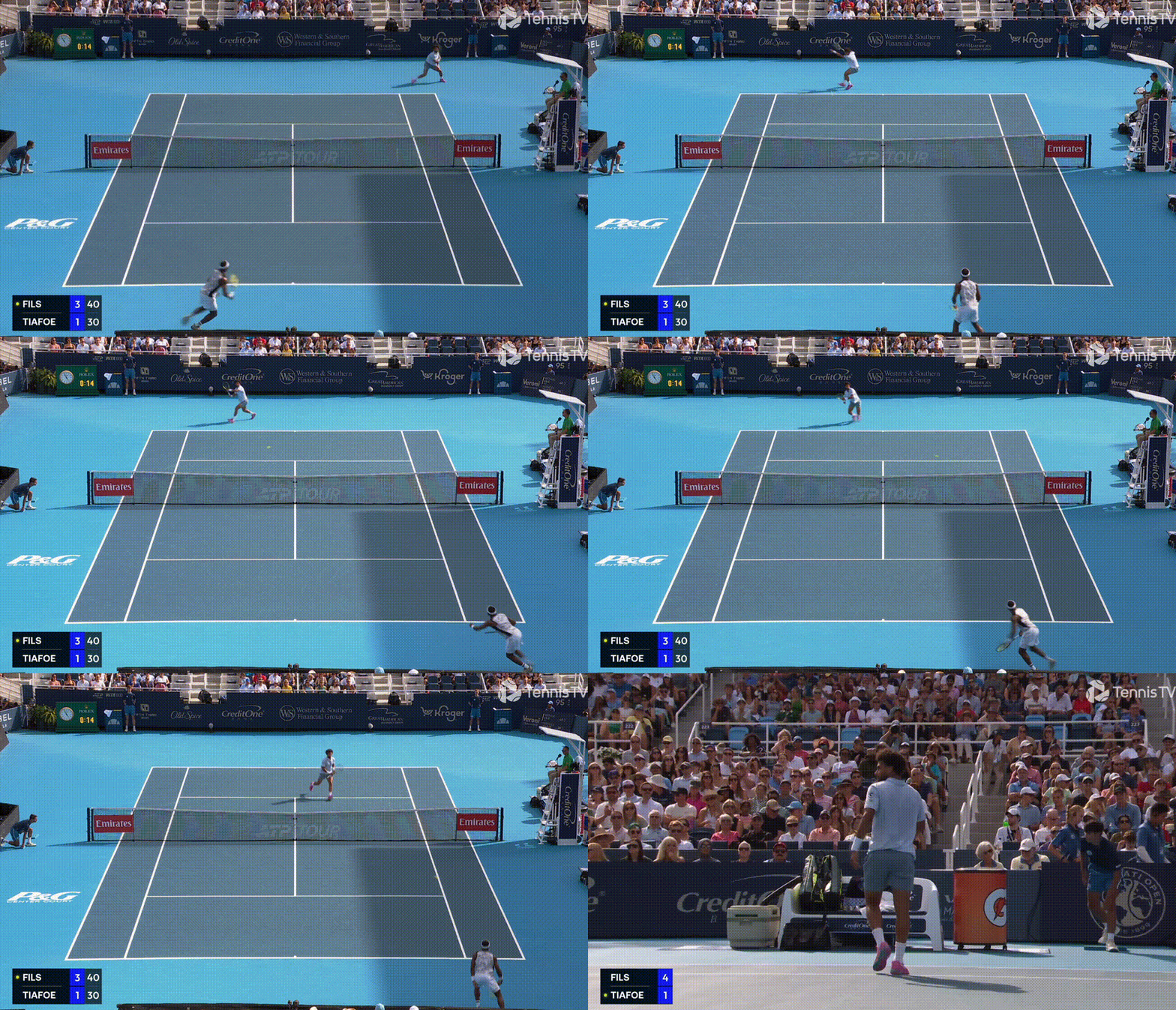
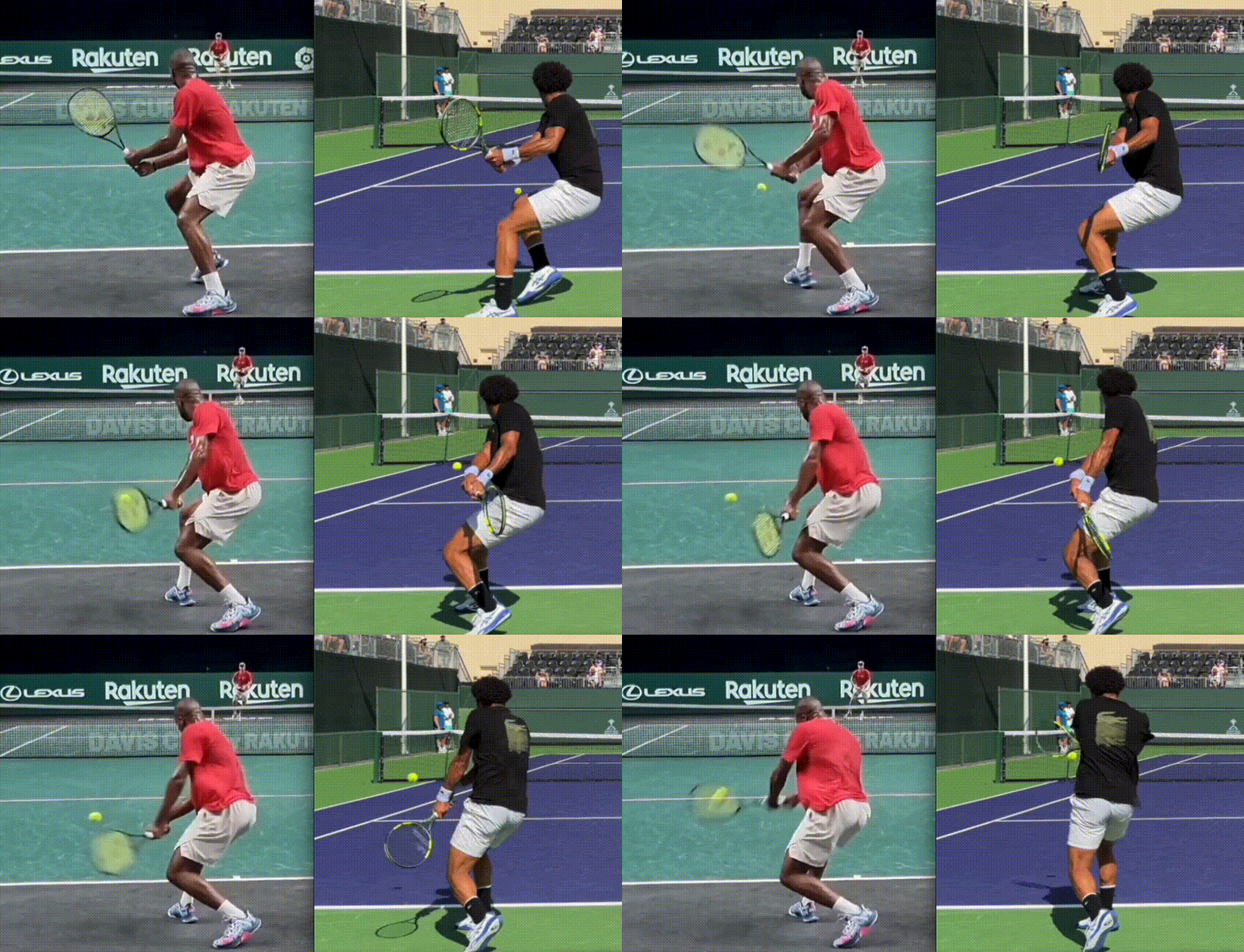
Modern swings are a blur, but if we slow down and look closely, the fates of these players are written in the small differences in how they position their hitting arms and racquets:
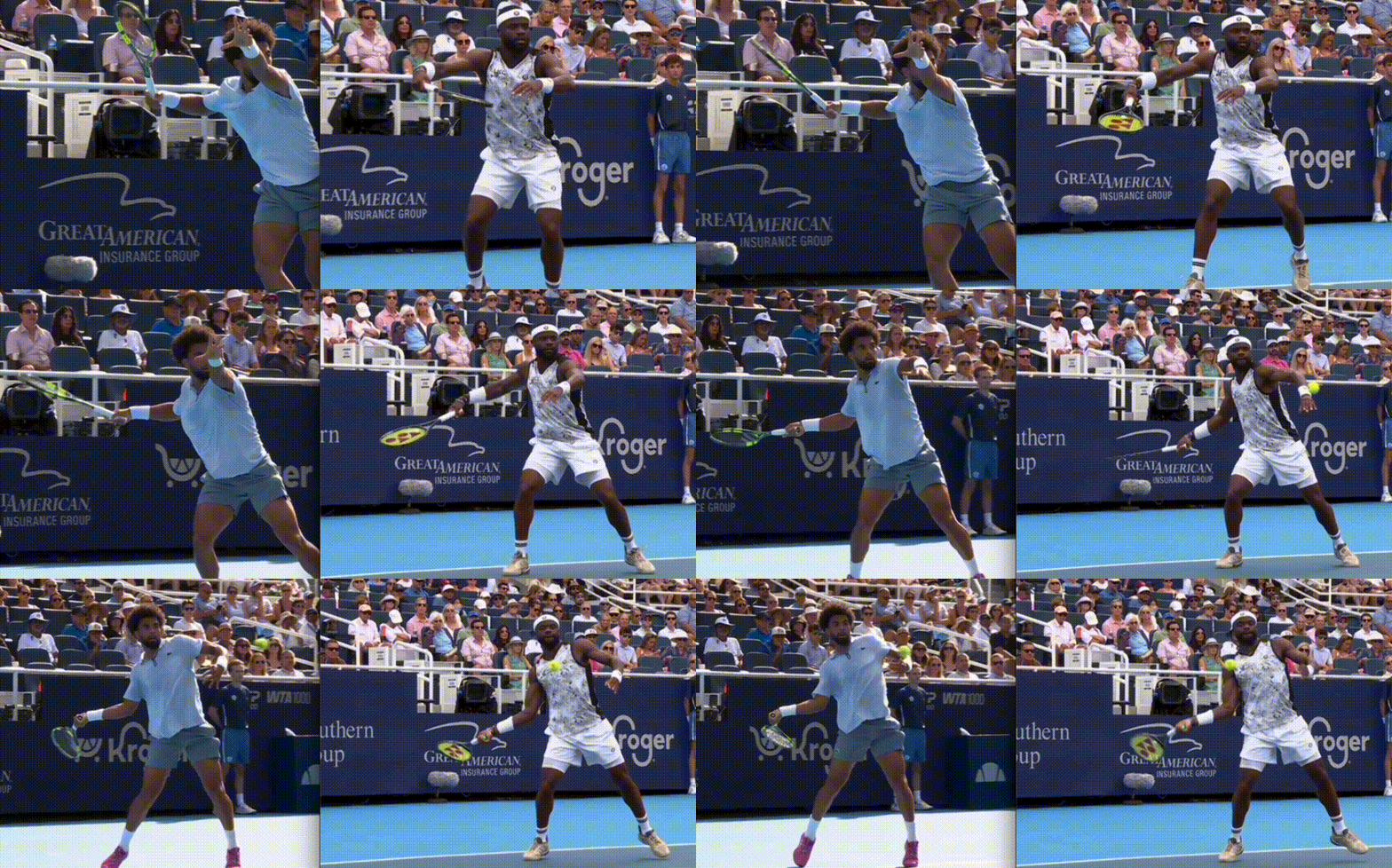
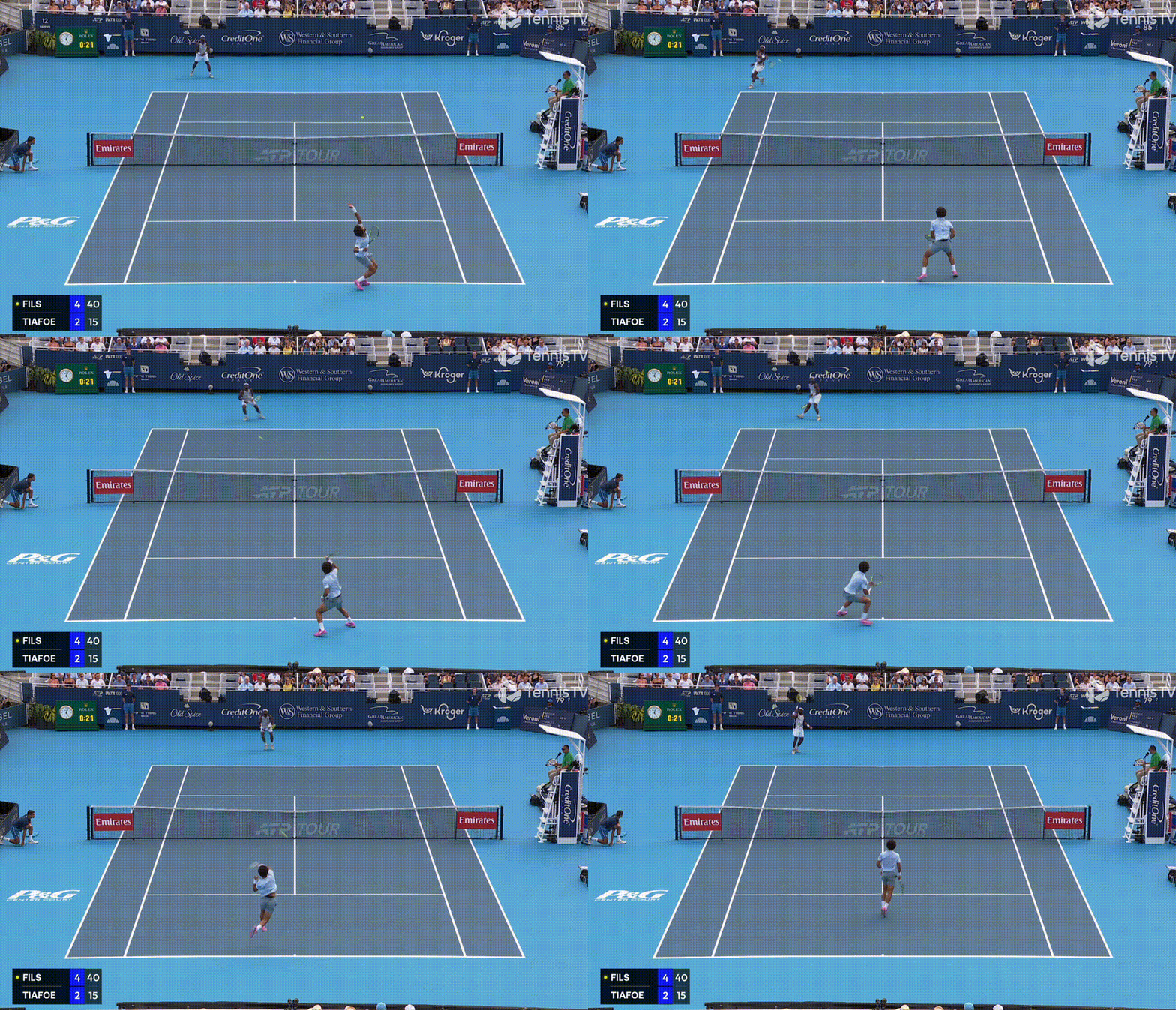
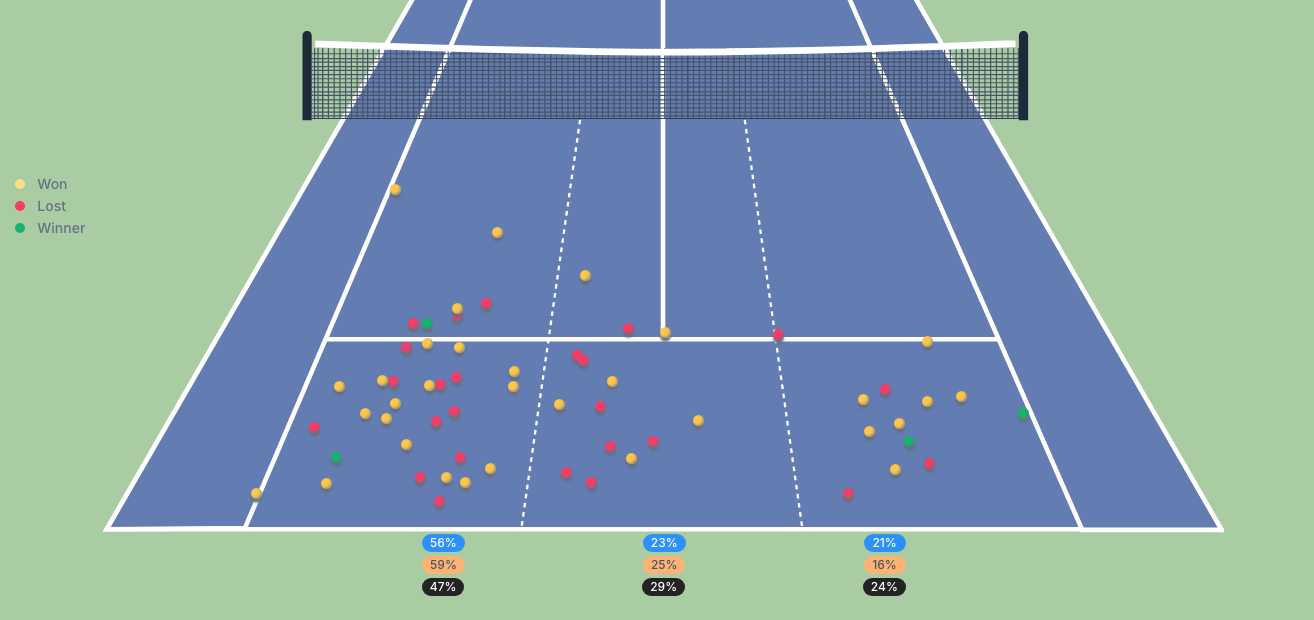
But this is more than just a forehand stretch mismatch. After all, the Frenchman also owns one of the most highly rated backhands on tour in 2026 as well, going down the line 5% more than his 52-week average today. This was the point of the match:
Tiafoe’s backhand is the bedrock of his game. He can lockdown and keep things low, as well as redirect off the baseline:
But in 2026 I’d still take Fils.
As I said after the Frenchman’s Barcelona title on clay, “these technical differences may seem inconsequential on first viewing, but they have downstream tactical consequences”. The added speed and spin mean players like Fils can redirect line from positions where Tiafoe is encouraged to play crosscourt; he can attack from deeper court positions; he can defend with shape and still push you back. Having those options creates headaches for opponents, and unlocks higher ceilings for those who possess it:
“You just sort of watch him [Fils], and you just feel, well, “how can you get to him? how can you attack him? how can you stop him playing his brand of tennis?”
— TennisTV Comms
There’s an F1 analogy here: Tiafoe is every bit as talented as Fils as a driver, but he’s stuck behind the wheel of a Cadillac, and Fils is in a Mercedes.
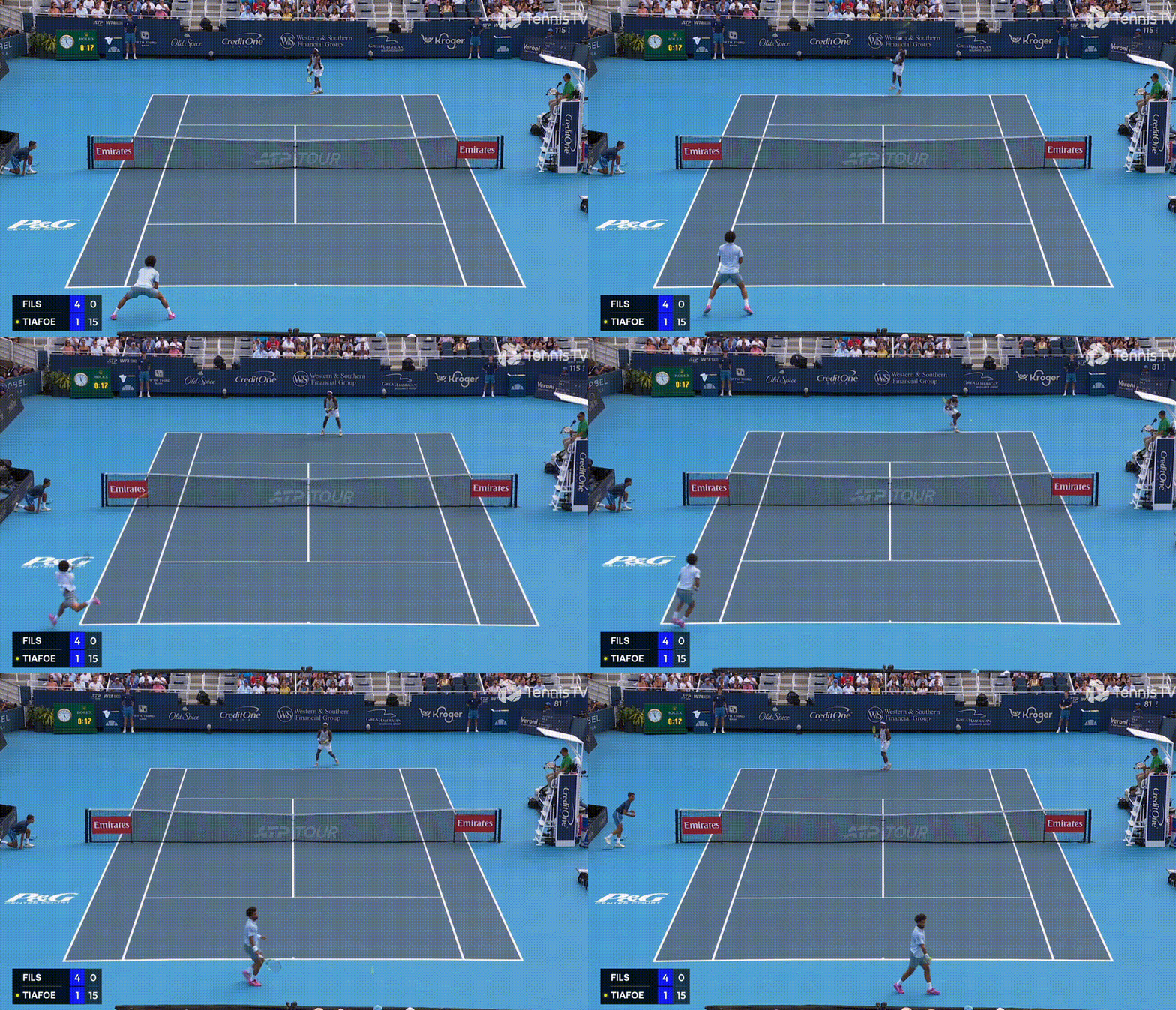
And the difference in machinery isn’t confined to their swings. “Best stretch wins” applies to court coverage too. Fils has the open-stanced stretches on both legs:
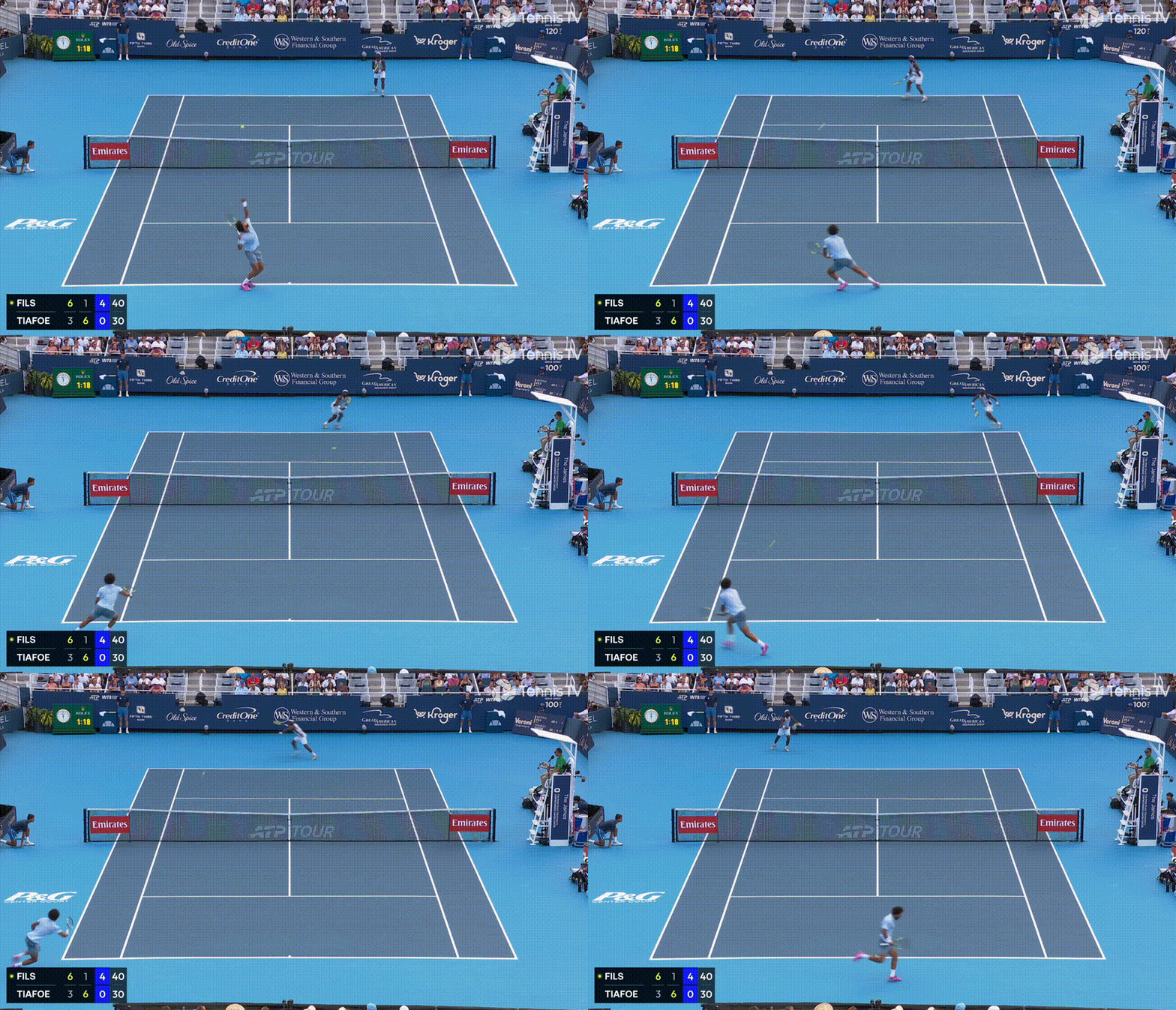
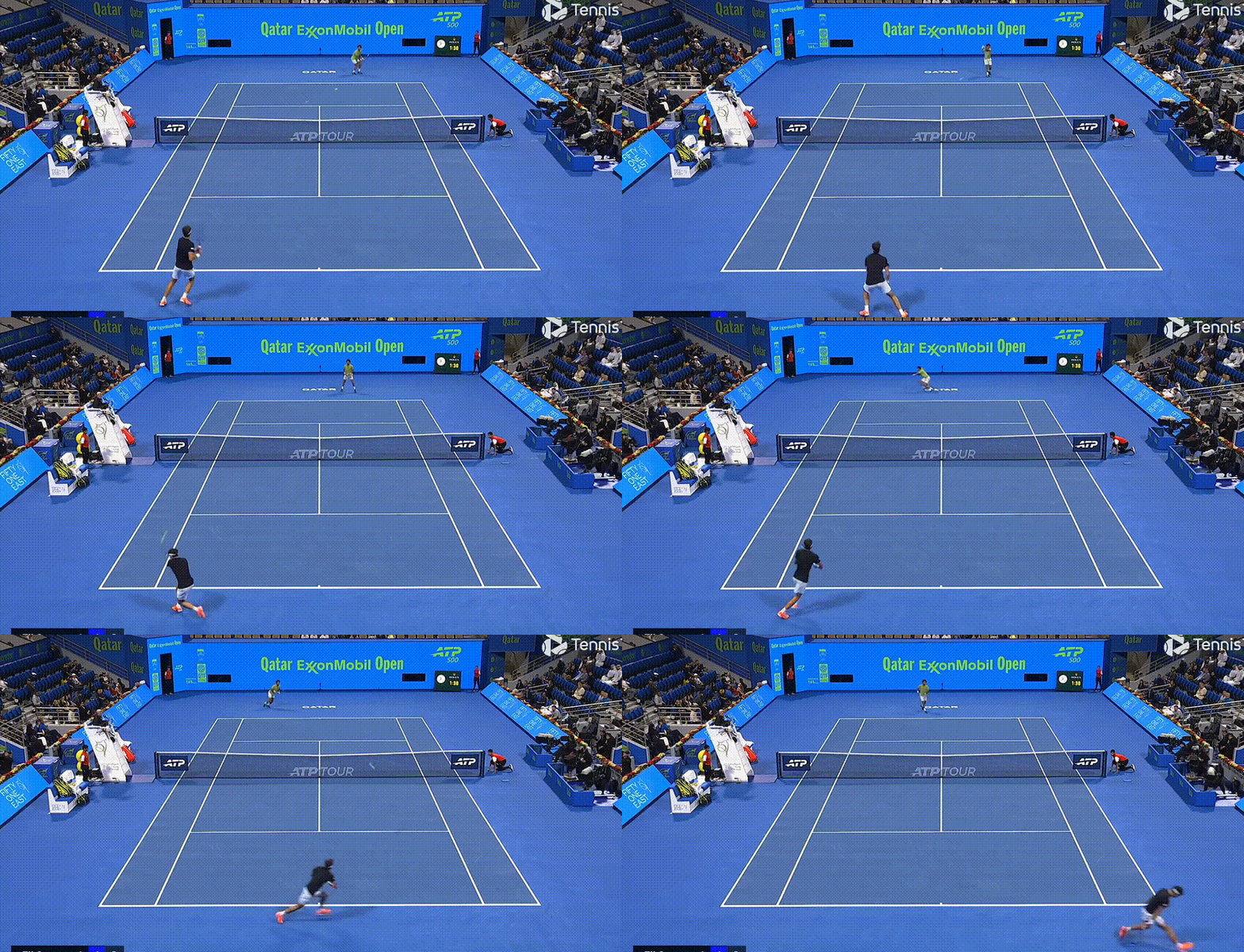
And Tiafoe simply doesn’t.
He’s driving with tech — compact swings, stiffer baseline-hugging movement — that hasn’t been able to dominate tennis since this guy:
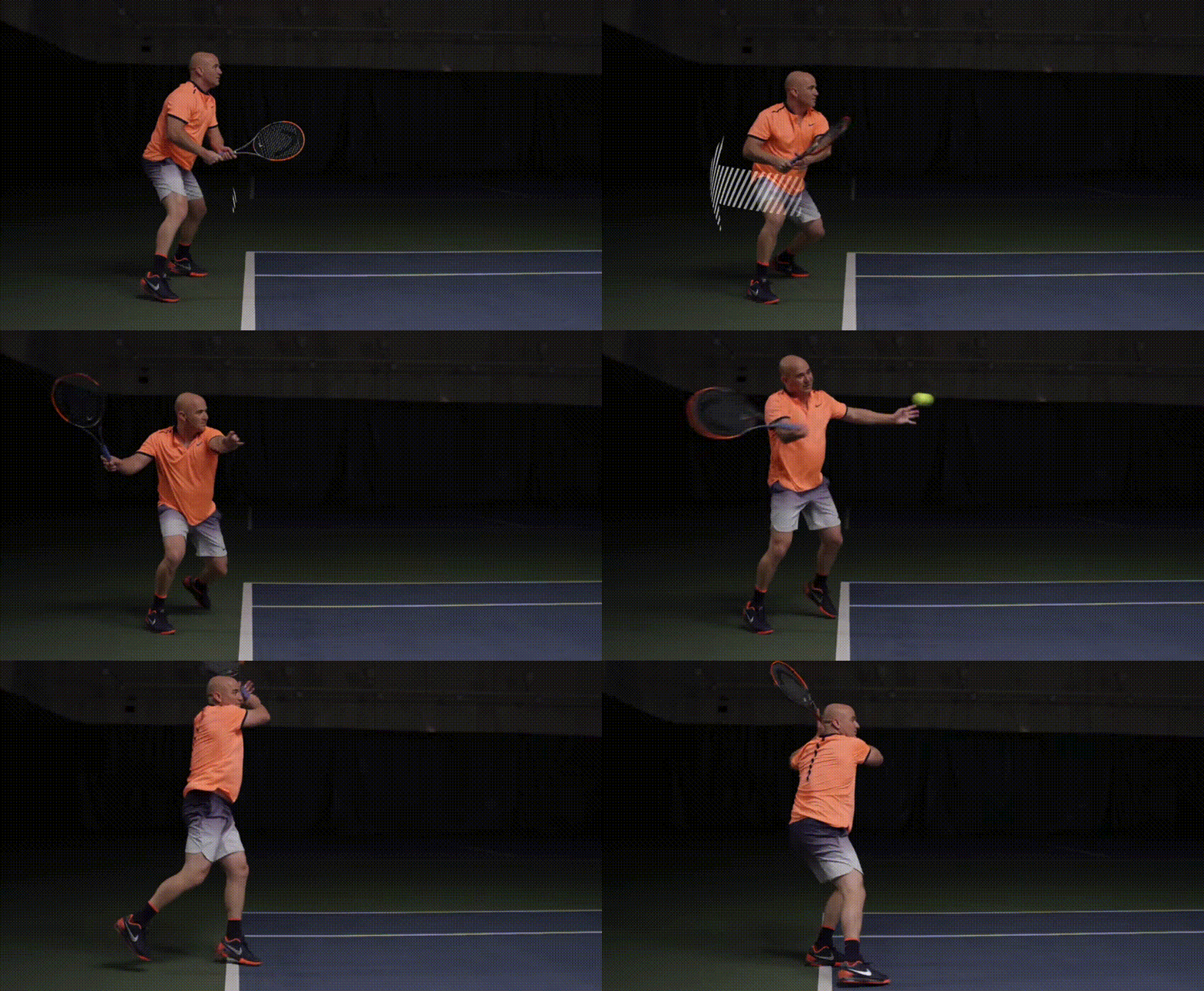
And that’s the interesting thing about the evolution of the game. As the materials got stiffer, with polyester strings and thicker racquet beams, the best exponents of the game went the other way and got stretchier, in swing and movement:
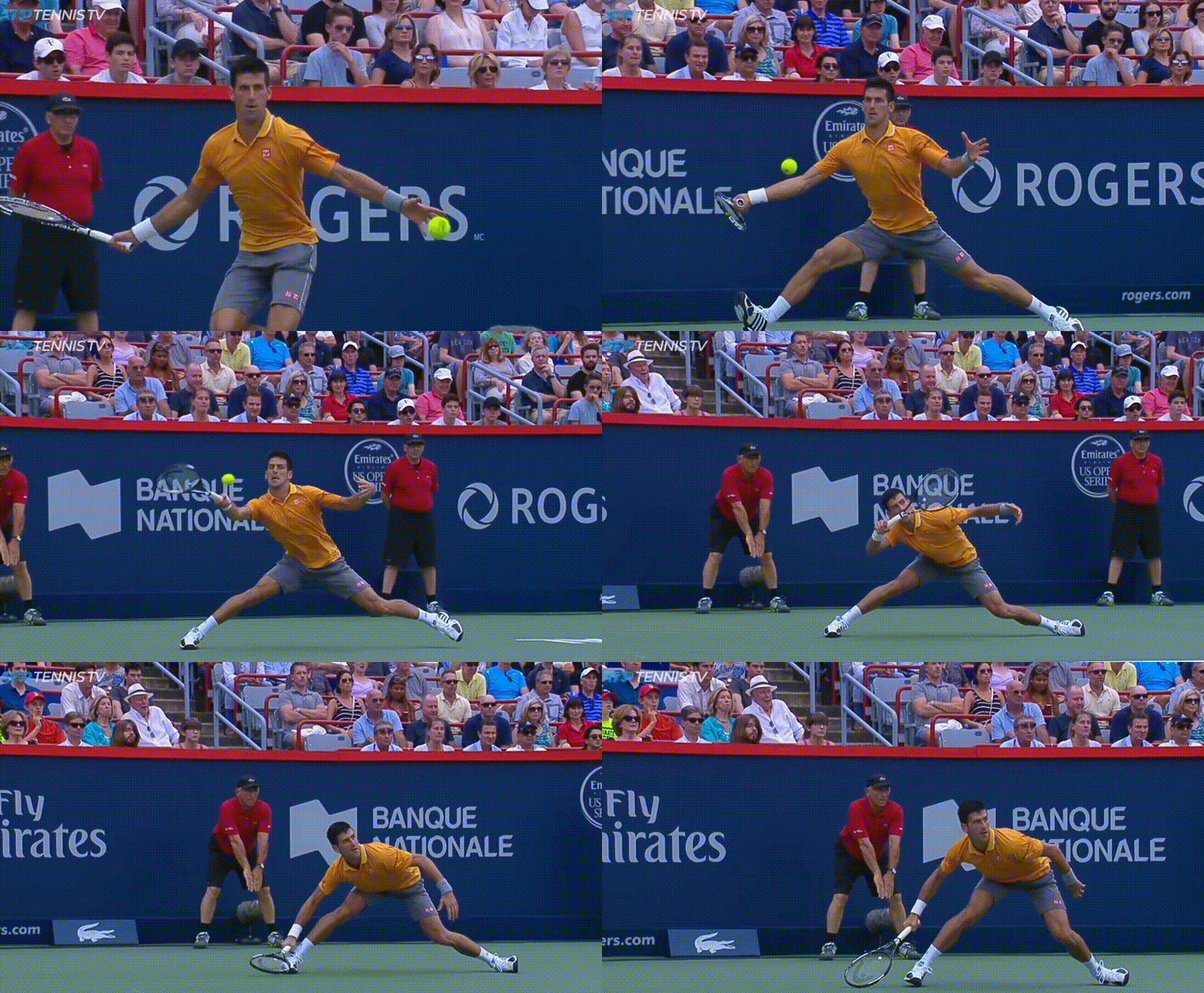
The caveat here is that only some players got stretchier. For hardcourt jungles like the USA and Australia, players often remained compact and outside, as grips went more extreme. You had things like a Jack Sock forehand, and de Minaur backhand.
It was the Europeans and South Americans, raised on a steady diet of clay, that seemed to adapt to the tech most favourably.
Tim Mayotte has an interesting little 7-minute YouTube episode that kind of touches on these themes.
Some excerpts (emphasis added):
“Tennis is the most complicated sport that exists in all games… and that’s the main reason we haven’t succeeded in the last 20 years…”
“If you look at the top American players between 2010 and 2022, the large majority of them have serious technical deficiencies in their game.”
“The Europeans start swinging harder, they swing longer, and more importantly, they understand that they can open the court up with excessive topspin, widening the angles of the court.”
“Back in the States, it was strange. There was no reaction to what was going on…there was no specific anecdote of what was going on in Europe. I heard comments about how our players didn’t move well.”
“The strangest one I heard was that movement was more important than technique. This absolutely blew my mind. Movement and technique have to be totally intertwined.”
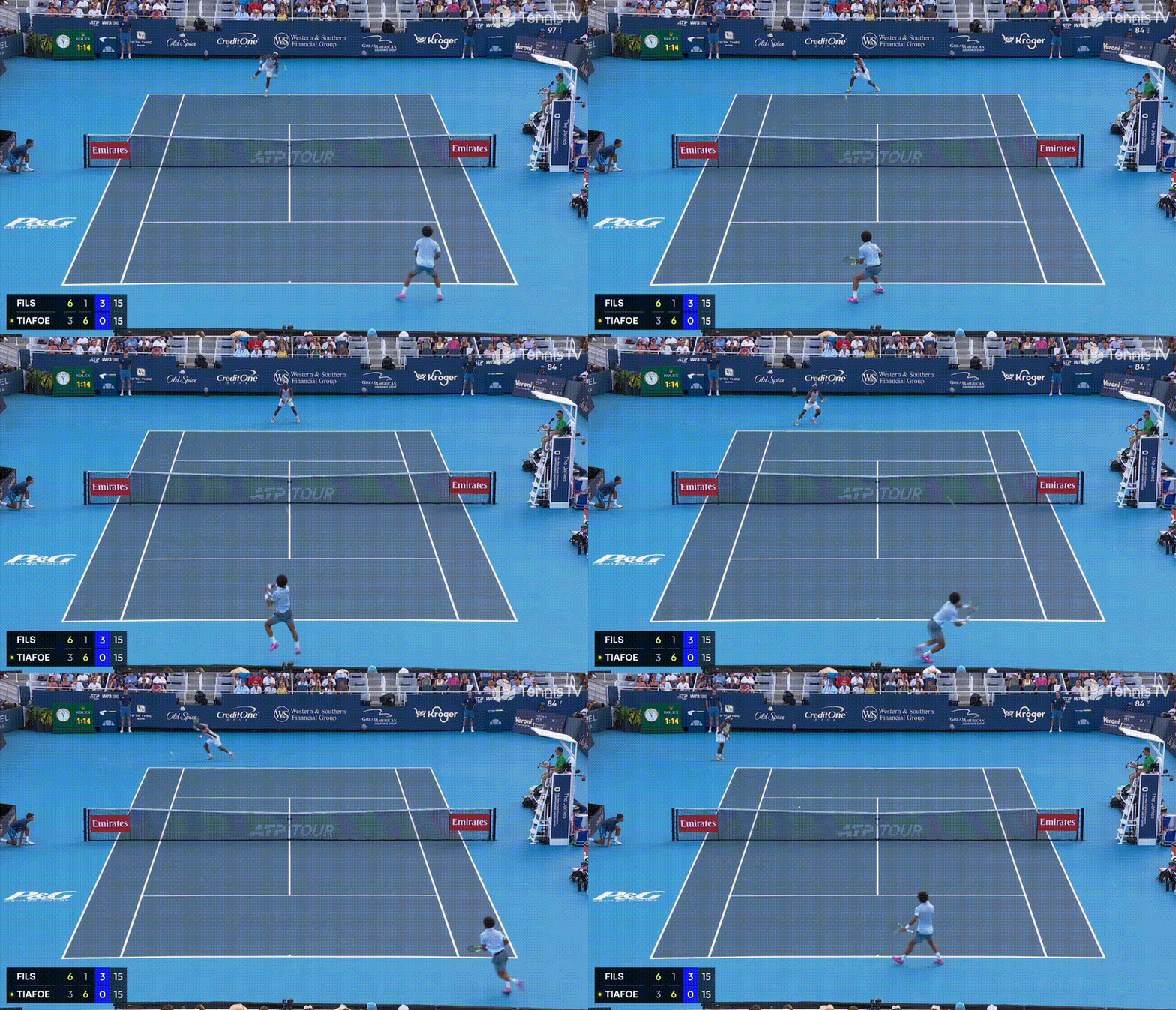
Tiafoe is one of the most gifted players in recent memory, but his technique is a product of time and place: post-poly hardcourt America. This often means that important matches rest on the racquet of his opponents, as it did today, when Fils’ forehand caught fire in the third set:
Is Fils the next man to challenge Sincaraz? It might not be the stretch some think.