Tennis Biomechanics: Forehand Force Vector Dynamics, Centripetal Acceleration & Horizontal Figure-8 Mechanics
Interactive Forehand Force Vector & Figure-8 Coaching Dossier
Explore dynamic 3D force vectors, real-time kinematic phase timelines, interactive centripetal physics calculators, and complete dossier archive downloads.
The Core Biomechanical Axiom: The modern forehand swing path is not a linear push or an isolated circular swipe, but a continuous horizontal Figure-8 ($\infty$). Straight lines have zero transverse acceleration ($a = 0$), forcing a complete kinetic stop at backswing apex. In contrast, curvilinear Figure-8 motion harnesses continuous centripetal acceleration ($F_c = \frac{m \cdot v^2}{r}$), smoothly shifting the force vector and propelling the racket into explosive ball compression at maximum Racquet Head Speed (RHS).
1. Force Vector Dynamics: Linear vs. Curvilinear Mechanics
In classical tennis coaching, players were often taught to take the racket straight back and swing straight forward along the intended target line. From a classical mechanics perspective, linear displacement along a straight path requires the racket head to decelerate to an absolute standstill ($v = 0$) at the apex of the backswing.
The Highway On-Ramp Analogy
Consider a vehicle entering a curved highway on-ramp. As the driver navigates the bend, centripetal force acts towards the center of rotation, and the passengers experience a perceived centrifugal force pushing them outward. If vehicle speed remains high, this curve dramatically amplifies forward tangential momentum when exiting onto the straightaway.
Similarly, when the tennis racket traces the upper loop of a Figure-8 during the preparation turn and descends into the lower forward loop, the racket head never comes to a kinetic dead stop. Elastic energy in the pectoralis major, anterior deltoid, and forearm tendons is dynamically loaded and released into ball impact without muscular straining.
Where $m$ is the effective mass of the arm and racket system ($\approx 0.45\text{ kg}$), $v$ is tangential racket head velocity, and $r$ is the dynamic turning radius from the thoracic rotational axis.
2. Mathematical Vector Map of the Horizontal Figure-8
The continuous Figure-8 swing loop links preparation, gravitational drop, kinetic uncoiling, impact, and deceleration into a seamless, perpetual energy curve:
Figure 1: Mathematical Vector Trajectory of the Figure-8 Forehand showing continuous curvature, transition node, and ball contact point.
3. The 5 Kinematic Phases of the Forehand Figure-8 Flow
| Phase | Biomechanical Action | Key Checkpoint |
|---|---|---|
| 1. Unit Turn | Torso coils $45^\circ - 60^\circ$ as a single unit; both hands bring the racket up and back. | Hand in front of chest; racket tip points upward; stringbed slightly closed. |
| 2. Gravitational Drop | Non-dominant hand releases; racket descends smoothly along the inclined plane. | Elbow remains low and tucked close to ribs ($10 - 15\text{ cm}$). |
| 3. Lag & Snap | Ground reaction force uncoils pelvis; hand leads; racket lags creating peak elastic torque. | Wrist remains in relaxed passive extension; no premature muscular pull. |
| 4. Ball Contact | Steep low-to-high linear displacement meeting the ball in the kinetic sweet spot. | Impact occurs $30 - 40\text{ cm}$ in front of lead hip; face $80^\circ - 85^\circ$ micro-closed. |
| 5. Follow-Through | Uninhibited centrifugal energy release into a fluid windshield wiper finish. | Racket wraps naturally across the chest; release all energy with zero braking. |
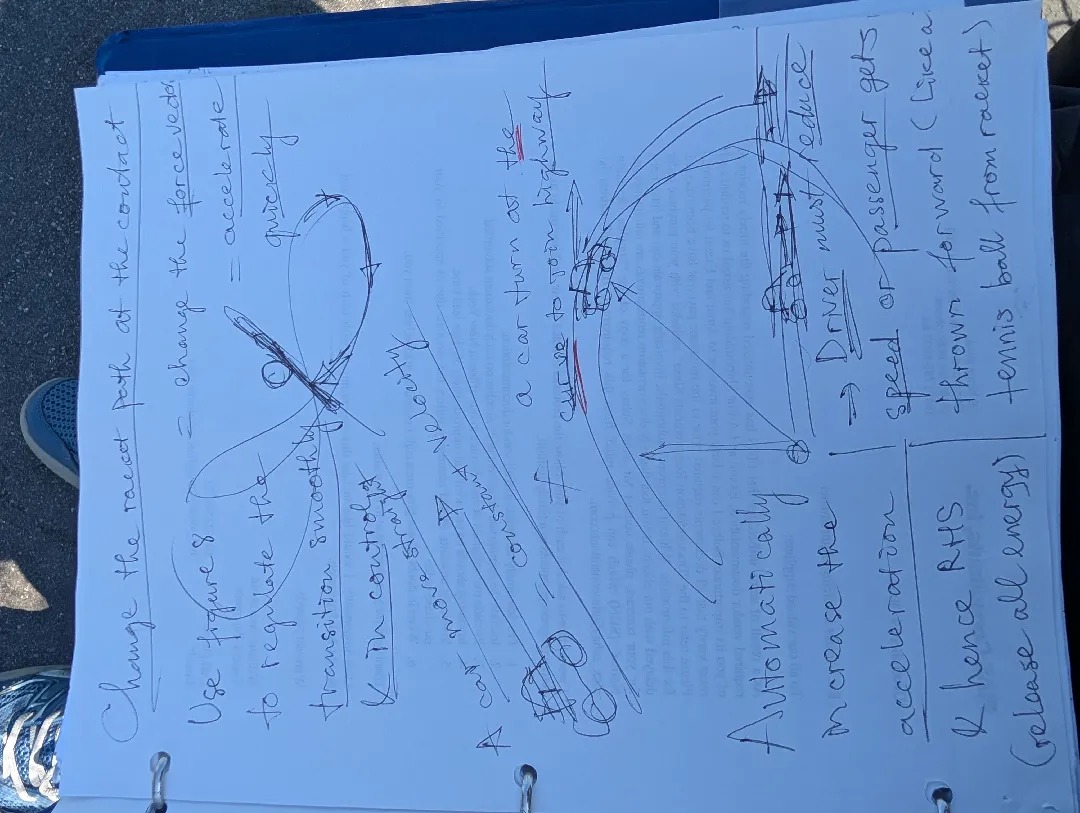
Figure 2: Archival Coaching Notes (Dossier PDH / FH-08) — Detailed field analysis on horizontal Figure-8 force vectors, centripetal curve acceleration, and 5-phase kinetic breakdown.
4. Diagnostic Breakdown of Common Mechanical Faults
Fault 1: Arming the Ball (Forgetting Core Rotation)
When a player initiates the swing with the biceps and forearm before the hips have uncoiled, the kinetic chain breaks down. This disconnect deprives the stroke of ground reaction force ($GRF$), produces weak ball penetration, and forces the elbow and forearm tendons to absorb excessive shock, leading to medial/lateral epicondylitis.
Fault 2: Late Contact Point (<20cm in Front of Hip)
Taking the racket too far behind the torso ($>45^\circ$ behind the thoracic plane) delays the forward path. The player strikes the ball alongside or behind their hip, resulting in sprayed errors wide or long and wrist collapse under heavy incoming ball momentum.
Fault 3: Abrupt Braking / Clamping the Follow-Through
Fearing that the ball will fly out, recreational players often artificially squeeze the grip and brake the swing immediately after contact. This not only robs the ball of topspin dip, but also creates high shear stress in the posterior rotator cuff and scapular stabilizers.
5. Instructional Video Breakdown
6. Prescriptive Neuromuscular Training Protocols
The 1-2 Cadence Slow-Impact Drill: Have a training partner gently bounce balls from a $45^\circ$ forward angle. Count out loud: "1" when the ball hits the court surface (verifying the racket is at the lowest drop point of Loop A), and "2" at ball impact. Freeze dead at contact to confirm your hand is $30 - 40\text{ cm}$ in front of your lead hip, elbow is in a stable L-frame, and the wrist is in relaxed extension.
Mirror Figure-8 Infinity Shadow Swings
Stand in front of a full-length mirror with your standard Semi-Western grip. Execute continuous, slow-motion horizontal Figure-8 loops without stopping. Maintain supple wrist relaxation and verify that the crossing node of the loops aligns directly with your sternum. Perform 50 repetitions daily.
Conclusion
Mastery of the modern forehand is founded on fluid Newtonian mechanics. By abandoning rigid linear backswings and adopting the **continuous horizontal Figure-8 path**, players harness continuous centripetal acceleration ($F_c = \frac{m \cdot v^2}{r}$), regulate force vector shifts seamlessly, and deliver explosive, penetrating topspin with effortless biomechanical elegance.